Visiting Vilnius, Lithuania – Part One. Date of Visit: February 2025
George Orwell said: “A genuinely unfashionable opinion is almost never given a fair hearing…” So when I was greeted with “Why?” as the common response to mine – over mid-February exchanges in London that encourage enquiring over one’s plans – I was even more eager to go.
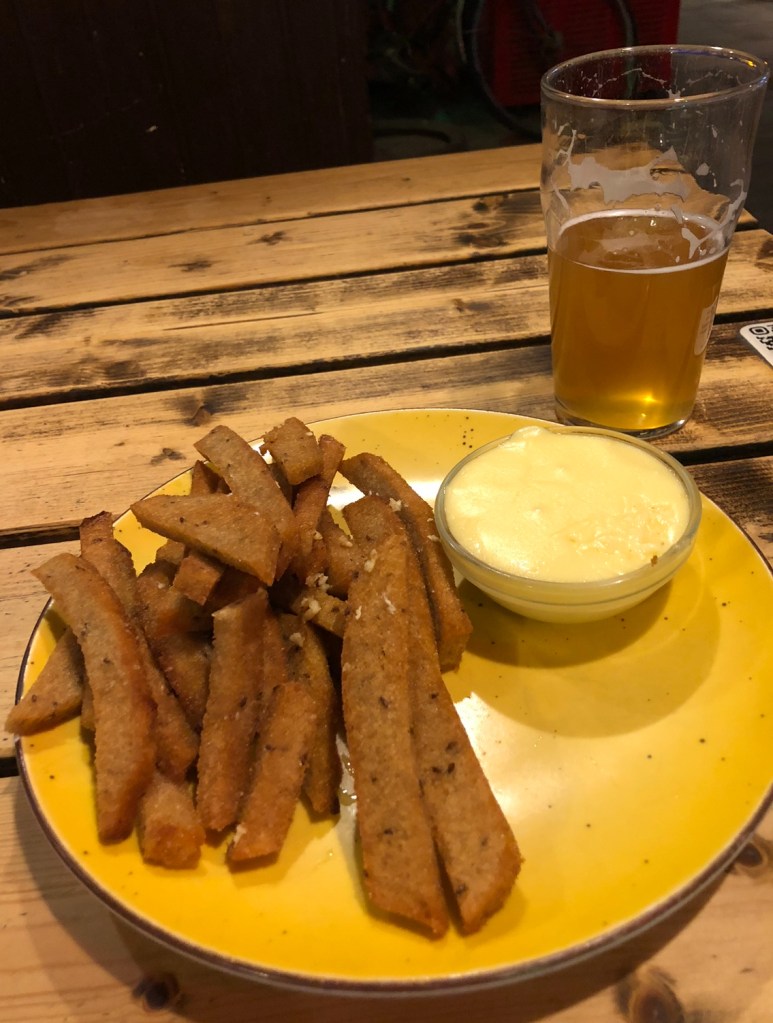
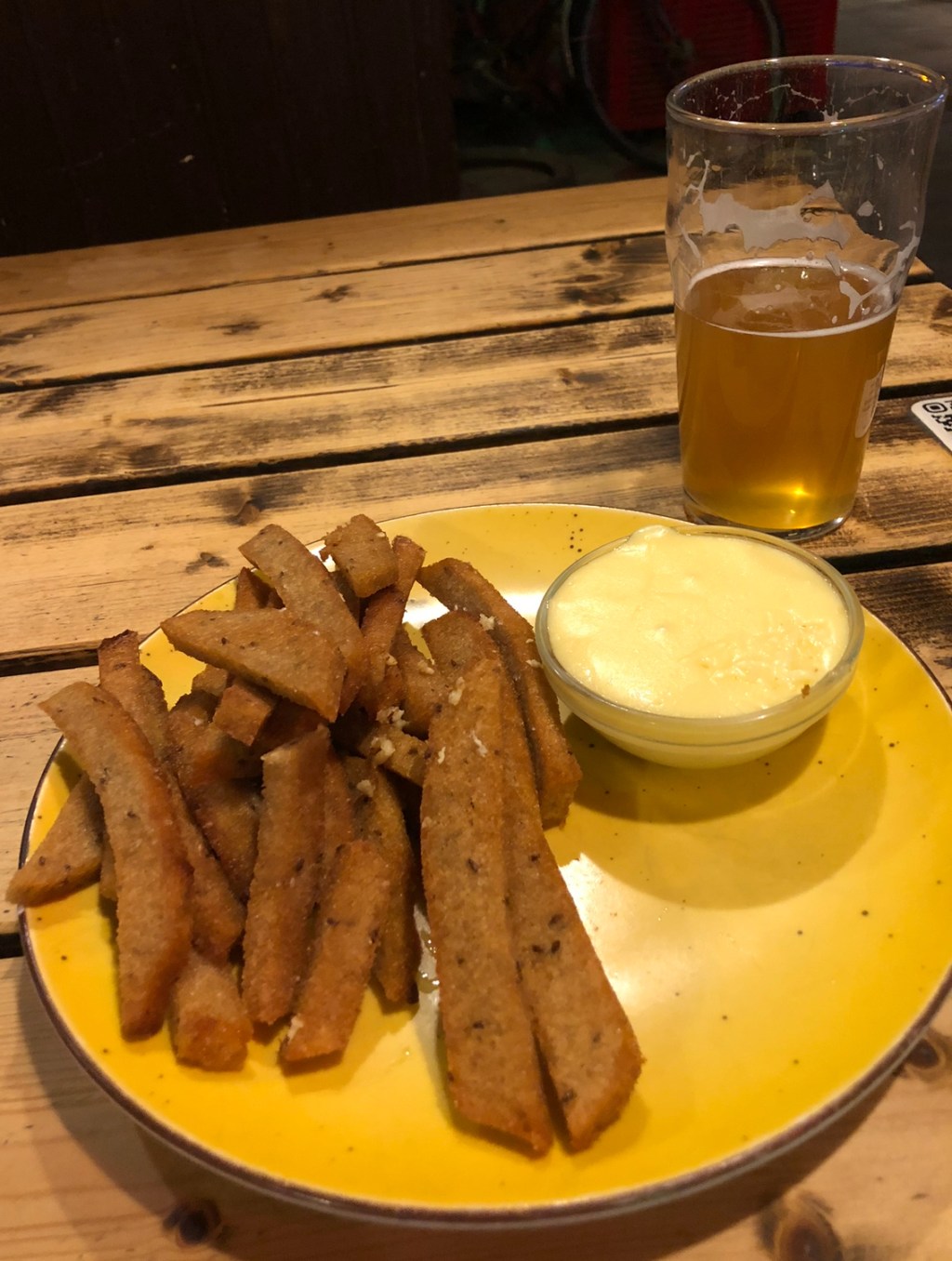
Fried Lithuanian bread smacked me upside the head. The historic Old Town Vilnius was founded in 1387 so it probably saw me coming. As did this Lithuanian snack that must have smirked to its mate Lithuanian wheat beer and had a giggle with the garlic. That’s those flecks in the picture: garlic.
Earlier I acquainted myself with the Lithuanians of London by way of booking an off-peak Ryan Air flight experience. This included the added thrill of a group of us paying a fine more costly than the plane ticket – newly implement, of course – for exceeding their permitted onboard carrier luggage dimensions. As we shook our heads and took it on the chin, apart from one or two anti-heroes which sadly did not make it on board, I realised that I was disappointed in myself. I couldn’t convey collective emotion in the Lithuanian language let alone basic non-emotive conversation prompts.
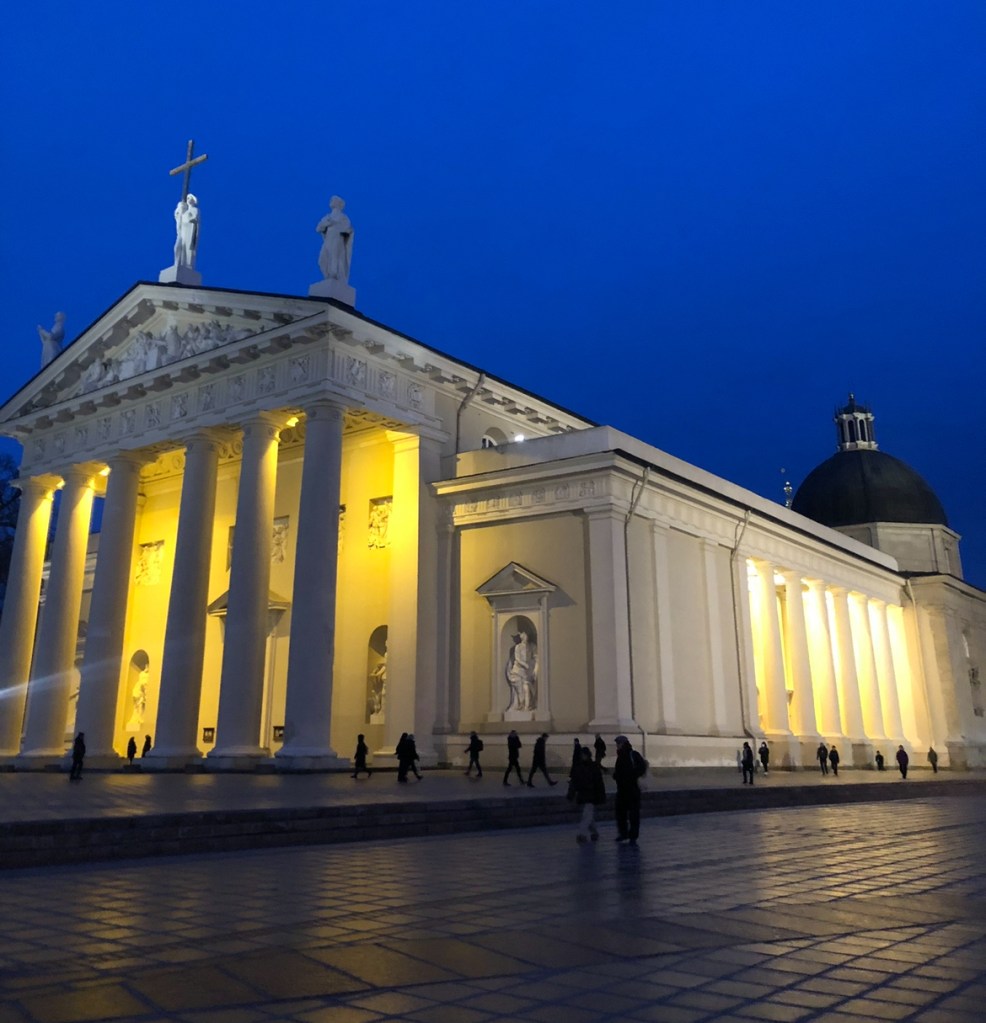
Šnekutis beer pub was were I had by first Lithuanian fried bread. English breakfast fried bread can sod off. Šv. Mikalojaus (Saint Nicholas) Street is where my trainers had an absolute wreck of a first date with all forms of white and black pavement encrusted ice. Coming off Cathedral Square, nearby (in better walking conditions) into contact with overhanging bulbs of welcoming lights, a beer-mat tramp stamped swinging door to draught beer at 10pm Lithuanian time, had me proverbially weeping with joy.
One might say that by that point anything I consumed or imbibed would have sent me over the edge. Which is fair, apart from the fact that I’m writing this many months later and I’ve eaten a lot of fried in the Baltics since. Paired with beer. Any way, home to the oldest surviving church in Vilnius – the Gothic-style Šv. Mikalojaus (Saint Nicholas) – Šv. Mikalojaus (Saint Nicholas) Street at Šnekutis is where I started my foray into Lithuanian wheat beer and bread.
Although the Lithuanian language is one of the oldest living Indo-European languages in Europe, I asked for whatever local beer and snack the bar keep recommended, in English, punctuating only my knowledge of beer (pour measures) in the process: a pint.
The accompanying cheese sauce was like edam, white cheddar and garlic mayonnaise decided that cohesively they united as an inseparable sauce when warm. The fried non greasy strips of kepta duona (Lithuanian fried bread) graced me with gentle linseed, whispers of malt syrup, barley and spices combined with flecks of unexpected astringency from the garlic. Kepta duona is magically moreish. The cheese sauce as anti American and cut off from Tex Mex I would swear I’ve never heard of a Dorito or nacho if it meant I could bottle this Süriu, Ĉesnaku ir Majonezu Sauce. It wouldn’t taste the same though. Not least because it’s garlic and cheesy (sour cream accented) mayonnaise.
Ushering my tired trainers back out to the their hazardous fate I took in the post snow air, a mix of piss and mildew and I did: I felt excited about the next days of exploring this historical Capital City of Lithuania. Was there another language that google translate disabled the speaker tool for? Was the local wine as good as the beer and was breakfast a thing here? I didn’t know how to pronounce sveiki yet but if I heard hello one more time when I tried, my head would explode. The local wine sounded interestingly strange and I wondered if the complimentary buffet breakfast was real, considering what I paid for my clean, warm, private room.
I got some change from a 10 euro note for my pint of local wheat beer and kepta duona with cheese sauce. There are local hearty, substantial meals to try at Šnekutis at reasonable prices too so you should try them.
There are five historic and cultural regions in Lithuania. Vilnius the capital South Aukštaitian dialect speaking, is located in the ethnographic region of Dzūkija (also known as Dainava). Although the regions can be considered to correspond to different Lithuanian dialects, this is not strictly the case. In the case of Vilnius: it does not mean that Dzūkija is part of Aukštaitija; dialects of other regions are spoken in certain parts; there are three indigenous dialects in Samogitia (some of which are subdivided into sub-dialects).
If that sounds complex that’s because it is.
Overall for a first timer in the capital of Lithuania
Taste: 6.9/10
Service: 4.2/10
Value for Money: 7/10
 EuroRevs
Let me know if you’d like a part 2!