• Where to Eat in Ibiza: The Best Restaurants for Every Budget (2026 Guide)

    THE ISLAND OF IBIZA IS NOTABLY CELEBRATED for its nightlife — and rightfully so. Beach clubs and pool parties heave, all day. A hungry traveller, needs to know the best restaurants in Ibiza. From high end, to budget friendly restaurants on the island, this article lists the best of the best.

    Searching for restaurants alone eats up valuable sunset viewing time. Relax. Enjoy captivating powers of golden hour: time stands still, burnished yolk colours recede to magenta, skywards. The best restaurants in Ibiza await: cheap tapas, authentic Spanish cuisine, stylish beach clubs or fine dining, are all covered in this food guide of the island — across every budget.

    Best Restaurants in Ibiza

    1. Jondal

    Jondal or, Casa Jondal is in Sant Josep de Sa Talaia. Dishes here have touches of El Bulli -esque flair. While ingredient quality stands out at Jondal, it’s their impressive variety of cooking styles that take Casa Jondal to the next level. Celebrity hot spots — especially those grabbing attention for being the best restaurant in Ibiza – can show complacency, by association. Food standards remain high here.

    Fresh oysters in aguachile of sweet corn and yellow ají doesn’t exactly scream beach club fare. Neither fresh “bloody” oysters in tomato, chile, and lime. In Ibiza they do. Simple, cured Cantabrian anchovies and pan con tomate or, tomato bread are bold, naked. Topping one with the other is an Eivissenc thing; an Ibiza pairing, that’s downright delicious.

    Fresh oysters with green herb oil, Cantabrian anchovies in olive oil, and pan con tomate served as Spanish tapas on a rustic wooden table.
    Fresh oysters with herb oil, premium Cantabrian anchovies, and pan con tomate—classic Spanish tapas made with simple, high-quality ingredients.

    Oysters at Casa Jondal

    Not a stranger to both a good fresh oyster and paying more for bad ones – which these aren’t – it’s rare, as a purist, to come across them sauced up in something remarkably palate appeasing. They’re spectacularly fresh, without getting lost in the aguachile, or herb oil. Their fatty, unctuous body sacs radiate towards floating skirts that reassuring represent the essence of the Mediterranean sea. Subtle undertones of sweetness from yellow corn aguachile don’t disturb this purity.

    Faint fragrance from the lime oil is detected first. Following this is a mild heat and tomato sweetness. Casa Jondal’s “bloody” fresh oysters, herb oil blend rolls over the tongue on slurping all in one shot, out the oyster shell.

    Fresh oysters served on crushed ice with sweet corn and yellow ají aguachile, herb oil and Mediterranean seaweed at Jondal Ibiza.
    Fresh oysters served on crushed ice with sweet corn and yellow ají aguachile, showcasing the vibrant seafood dishes at Jondal Ibiza.

    Classic Ibicenco appetizers

    Premium, cured Cantabrian anchovies, on their own are intensely fishy slivers of sal de Ibiza. Melt in the mouth morsels of oceanic, funky marination; mimicking Mediterranean sharp sea salt and Oli d’Eivissa (Oli d’E). Tomato bread or pan con tomate provides that raw grated, sweet tomato essence against the crisp pan de Cristal.

    Ibiza’s Jondal restaurant deserves recognition: chefs use quality ingredients; Jondal’s menu dazzles, boasting 12 dishes with caviar, Spiny lobster – a delicacy of Ibiza – also features.

    Roast peppers in Sherry and garlic, that do a grand job of obliterating any bitterness from the roast, are a mellow accompaniment to the Mediterranean meal. Grilled steak is tender, while being a tad overdone for lovers of a rarer medium-rare cook.

    White asparagus with lemon mayonnaise at Jondal is finished with a slick of peppery Spanish olive oil. It’s this robust, fruity kick that compliments both the citrus edge in it and the rich, creamy mayonnaise.

    Best Restaurants in Ibiza for tapas

    2. Destino Bar de Tapas Destino Bar de Tapas

    Like Vegas, Ibiza was once broadly budget friendly. To a fault, they’re both now quite the opposite. Unlike Vegas, however, the nightlife is more spread out in Ibiza. Which means there’s wiggle room for spots like Destino in Sant Josep de sa Talaia, to exist.

    Party people parade throughout separate locations. In South Ibiza, patches of premium clubs percolate in pockets, maintaining that illusion of exclusivity; opportunity for private membership. What that means is, while people still party through 6 months of the year here, good food, eaten by locals and employees of the island, exists in Ibiza. Without extravagant price tags, beach club vibes, sea and sunset views.

    Catalan-style chicken tagine with almonds and prunes served at a tapas restaurant in Ibiza
    Catalan-style chicken tagine with almonds and prunes, served as a tapas dish in Ibiza.

    Chef Santiago prepares Catalan style tapas dishes, using Ibiza’s unique island grown ingredients. Eivissenc or in Spanish, Ibiceño tapas are special: complex layers of flavours form homely, comforting dishes. This is rustic cooking, remise of food eaten at a table with family at home.

    Catalan style tapas in Ibiza

    Rather than going full force on a couple of labour intensive dishes, what Ana and Josep began in 1997 was offer these tapas, with no compromise on quality. This is the best way to try a lot of traditional dishes in one go. Discovering new tastes and smells in smaller portions helps to illicit likes and dislikes.

    Unassumingly found in front of the church of Sant Josep, in the residential village of old, Destino Bar de Tapas is what and how Southern Spaniards eat. Picture perfect poolside plates aren’t comparible.

    In lieu of a menu, homemade dishes requiring a last minute cook, are on display. Assistance upon choosing comes in the form of the very human and helpful Claudio. Moorish influence is encapsulated in some bites: served in miniature tagines as stews in clay tapas bowls; with prunes, dates and almonds.

    Locals love unique tapas

    Customers’ preferences keep dishes in rotation, like a kitchen cooking mistake, of Thai meatballs, in mild red curry sauce. Licking messy sauce, escaping only as it dribbles, chin-ward down, is a reminder: photogenic food, is edible art. Effort is universally appreciated, in application of maquillage. Editing before posting. Equally easy on the eye is presentation of ingredients, each given their chance to show off at their prime; at peak, when purest. This is not that.

    Bacon wrapped dates are a squirting two biter of small, salty, sausage-like casing that melts into tender crystallised caramel goo. Traditional Catalan spinach with plump raisins and almonds replace pine nuts.

    Toasted nuts adorning dishes add crunch and a bold bitterness. So bold, that it wrestles it off what is expected to come from adjacent greens and herbs. Taste-wise, it gets to a point of exposing salinity, highlighting it’s presence. Accompanying fruit elevates it to another level.

    Culinary mess is what feeds us, far beyond what we see. It tastes of time and toil. It’s as immersive as trying to know a people or a culture, by eating what elders cooked and fed them.

    Wine starts around €4 a glass and plates of tapas are around €5-7 a plate. This is as close as you’ll get for a chance to try many home-cooked Catalan, Moorish Moroccan spices (prevalent in Andalusia) tapas style. Londoners go their local (pub). Ibizans go across the road of their local church.

    Best Beach Clubs for Food in Ibiza

    3. Cala Bassa

    Cala Bassa is on the western coast of Ibiza. Conveniently located, where the CBbC group hit the jackpot by basing their flagship beach club restaurant, Cala Bassa on the shores of Cala Bassa beach. The beach is in Sant Josep de sa Talaia, which is about a 15 to 20 minutes drive (9 miles) west of San Antonio.

    While being far from a hidden gem, judging Cala Bassa on location alone would be like saying the best places to eat in Ibiza are on the beach. However, it may be the best beach club restaurant in Ibiza: in spite of its stunning natural surroundings, the overall eating experience is an air of calm. It’s enormously appreciated given the weight felt from Ibiza’s beach club restaurants, under pressure to turn tables.

    So why Cala Bassa? Rotting in the shade with a book? Lunch by the sea invigorates even the dullest of appetites, the worst of moods. Pumped full of wellness and vitamin D? Well, that’ll turn to salivating after swimming; sweating from sunbathing. Hunger and thirst is as formulaic as a special beach lunch menu.

    Xavi Margui Fabra is a key CBbC’s brand partner, spanning prominent venues across Ibiza.

    What not to order at Cala Bassa

    Just don’t order sushi. Or anything fried, especially if patatas bravas isn’t on the menu. Beach club prices are no joke and then, of course, there’s the element no one talks about.

    Highly stimulating stress on the senses, that has nothing to do with whatever playlist is on. No one’s shoulders are relaxed. Everyone’s looking around at anything, but their table. It’s an atmosphere designed to get you in and out as quickly as possible. In the nicest way possible.

    So that’s why Cala Bassa. That’s not the feeling here. It’s a nice change.

    Every restaurant featured was visited and photographed by EuroRevs. We pay for our own meals and write independent reviews based on first-hand experience.

    Final Thoughts on the Best Restaurants in Ibiza

    Once upon a time, scratching Ibiza’s surface exposed Euro trash; Sharm El Sheikh vibes, along a clubbing strip. Ibiza clocked on fast and hard to grow out of this student group holiday ideal.

    Decent, affordable accommodation, by clubs and shisha bars, with inclusive meal-time buffets, are gone. What replaces all this is high end hedonism, straddling high net worth wanderers, with “wellness retreat” passport stamps. Wanting renewal. Needing renewal.Spending time in Ibiza, during the peak seasons and the off seasons, gives a greater understanding to where good food is found. Deciphering its raw market value, quality of preparation and cooking and whether it’s worth spending time and money on it.

    Spanish gastronomy in the Iles Balears

    Why is where to Ibiza important when gastronomy, in other parts of Spain, document other regions?Traditional Ibicencan cuisine relies on Ibiza’s natural, agricultural reserves and seasons. What’s eaten in Ibiza develops from its Catalan, Phoenician, Roman, Moorish histories. José Andres writes, with authority, on the subject of Spain; championing its gastronomic identity, deeply rooted in its history.

    Why trust Eurorevs?

    Every restaurant featured was visited and photographed by EuroRevs. We pay for our own meals and write independent reviews based on first-hand experience.

    Abundant regional dialects are spoken in Spain. Even people with little land between them, eat different things. Why? Spanish cuisine has vast capacity for an abundance of regional recipes, specialities, born out of history and changes in landscape. In spite of Mc-modern life, regional food and drink traditions; tastes and cooking styles, fight for a place at the table. Especially on Sundays.

    Eurorevs is covering more quality eats in Ibiza — as well as the low down on Jamón prices — next. Spanish olive oil tastes different compared to Italian olive oil, so Eurorevs will give a simple background, as well descriptions of flavours. The next tapas spot being covered is for feasting. It’s as hard hitting and budget friendly as it gets in Ibiza.

    Subscribing as a reader alerts visitors to the next article. Every restaurant featured is visited and photographed by EuroRevs.

  • Hoppers: Snack Satisfaction In Sunny London

    EVERYTHING LOOKS MORE APPEALING in the sun. Whether al fresco dining, or simply seeking snack satisfaction in sweltering in London; we’re spoilt for curb side choices. Every borough brings out even the stingiest of punters. To restaurants; beer gardens, bars.

    Like bees to honey we flee our un air-conditioned homes, to cooler pastures, unsure what to eat with our frosty beer. Clinking glasses of rosé whisk us away from City air, to places like Tuscany; Antibes, Chiringuitos.

    Street food style snacking in London restaurants

    Sometimes, a charcoal grilled morsel of spiced meat is called for. Perhaps, something sprightly; salade Niçoise, refreshing gazpacho, super salty shoestring fries. Depending on the sun exposure had for the day, appetite is affected accordingly.

    Wide eyed, not knowing what hankering befits me, I meander through Soho, before a clockwork scheduled meeting. Out of ideas, I stop at Hoppers on Frith Street.

    Do local Londoners still frequent London restaurants?

    While going out to eat in London is a fantastic way to part ways with hard earned cash, Londoner’s will go to restaurants. For several reasons.

    They continue to do so, when they can. If they can. In any economy. Restaurants aren’t empty when tourist season is low. Look at the number of growing restaurants, everywhere. More gastropubs or pubs serving food, in residential areas.

    Resistance is futile, when it comes to prioritising this activity. Not making dinner party plans: picking a restaurant, thinking to make a group booking. Walking in alone. Whichever happens first. Even if it means the rest of the week, or month, is looking pretty bleak.

    No need to justify spending money on restaurants

    Shops closing early on a Sunday? Charcuterie needing replenishing, for that impulse-buy board? Getting embarrassed by being on first name bases with delivery app drivers?

    Going out to eat at an establishment, particularly a restaurant, is a mini-break from real life. At a restaurant, those simmering thoughts, not worth having, die at the door. Return they shall; while simmering fridge layabouts, over a stove top, before doing dishes afterwards.

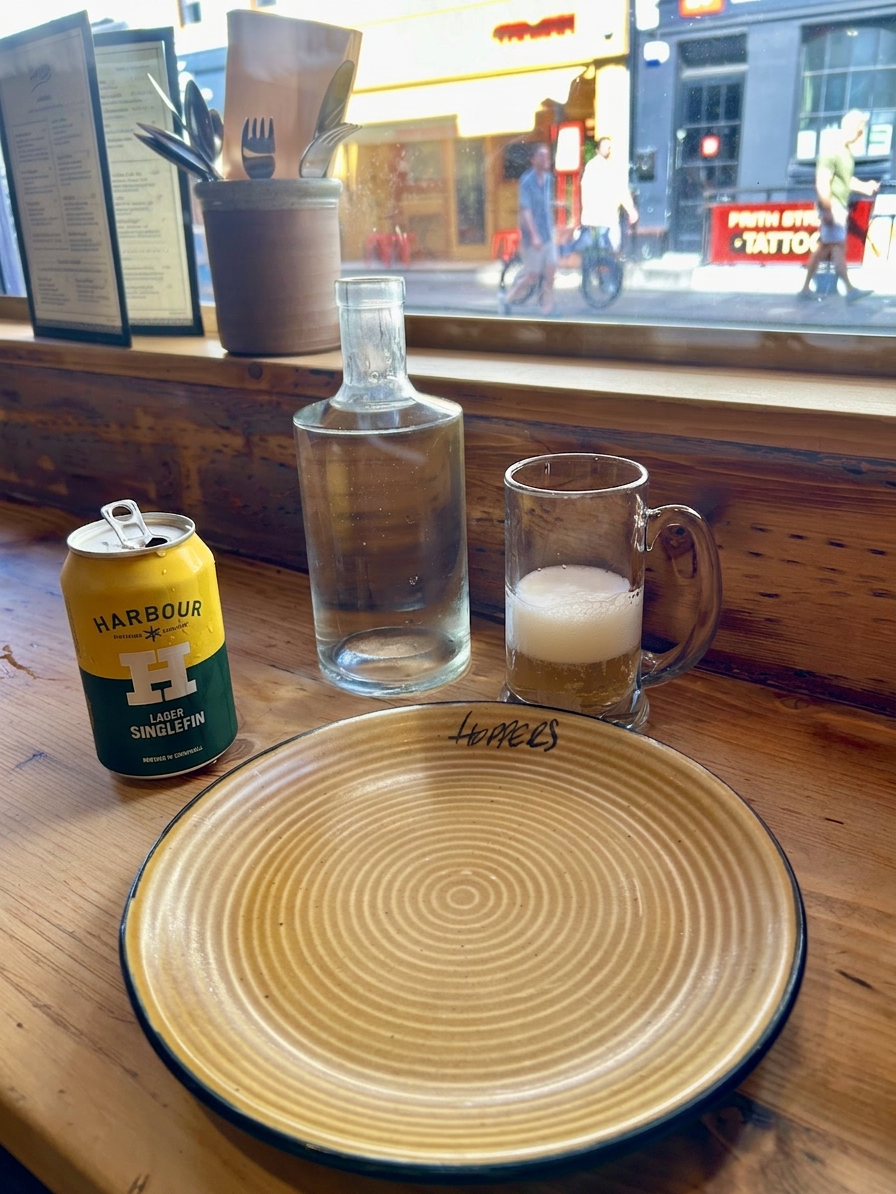
    About to snack in one of many London restaurants on Soho's Frith Street

    eurorevs.com

    Good food is important. Pleasures in dining al fresco alone; with family, friends should include good food. While it’s not always the case, it’s the jewel in the crown of the experience, as a whole.

    Making good menu choices in Soho London Restaurants

    Hoppers need fermenting of rice flour for up to 18 hours. London restaurants calling their hoppers recipe an authentic Sri Lankan hopper recipe, can cut corners: instant hoppers take 30mins. Sharing the same basic ingredients as Indian idli; instant or authentic hoppers are made at Hoppers, now a chain, throughout London. Caveat here being, it’s called just a hopper on their menu.

    Essentially, hoppers are bowl shaped, coconut flavoured crêpes, typically found filled with egg. on the streets of Sri Lanka. Frith street, in London’s Soho: the birthplace of cholera; historically riddled with all kinds of debauchery, boasts such street food. No one knows why it’s called a hopper but it’s selling in London restaurants.

    Residing now in tandem with theatre; art, hedonism. Gentrification of the West End means that it’s socially acceptable. Debauchery, that is. Eating well, too.

    Hunting cries of “So-ho!” in the 17th Century are where the name of this London hub derived from. Open fields it was at that time. A royal park for the Tudors and Stuarts. Now we can sit here and decide between a pint or a half pint. Dim sum or dosa.

    Making a good menu order is simple. Select one item at least, if it’s there, that’s scarcely found in other London restaurants. Inconvenient dishes for the home cook, make for a good order as well. Hoppers are just that.

    Satisfying a dosa craving in Soho instead of Southall

    Plot twist: although unfamiliar with hoppers, it’s the brief extreme weather that has me feeling so-so. So swerve I do, along with my order, to park myself atop a stool, tucked in Hoppers’ interior countertop. Facing Frith Street through the glass, I make a more familiar order.

    A treat it is; craving a cold draught Cobra or Lion lager, while Frith street watching, this once popular aristocratic residence. Nearby where I sit, is Bar Italia. Once a laboratory where Scotsman, John Logie Baird, first demonstrated television at No 22 in 1926.

    Beers come in cans only. I opt for Singlefin Lager, to go with my plain dosa. For the first time in my dosa ordering life, it’s plated on its lonesome, unless I pay extra for two house chutneys. Out of curiosity, I do.

    Empty as it is, my prior greeting hasn’t been welcomingly warm. Surprisingly, or unexpectedly, to the point it required clarity by repetition of instructions. Only for one hour could I sit by the window. No menu was provided me. Neither was anything on it explained, once I found one, myself, to peruse.

    Service is prompt, in line with the cozy, uncomfortable aesthetics. Guild to emulate, or draw inspiration from Sri Lanka’s village toddy shops; where neither Head Chef, nor co-founder originate from, by birth. Cuisine here is described as specialising in Sri Lankan and South Indian, nonetheless. My understanding is that; different types of dosa exist in both countries, regions within both countries too. Such regional differences in dosa recipes: preferred toppings etc. align with those held by most of the world’s foods of significant National popularity. Pizza comes to mind. Noodles, for example.

    London restaurants excel in simple food done right

    Texture makes a dosa, for me: light, paper thin crunch, a hint of grease around the edges. Contrasting this flakiness, is a slight chew. It yields towards the dosas’ centre, similar to that of a galette. Simple; incredibly moreish – to the point that I can’t help but attack it, with vigour.

    Dosas differ from hoppers, ingredient-wise, by typically having a 3:1 rice to lentil ferment in their dough. Like roasted lentil crackling, they’re pleasantly light yet satisfying. Slight funk from fermenting dosa batter, before it’s spread out thinly on a hot pan, is mellowed out by methi. Mildly bitter, methi – or fenugreek seeds – balance the bacteria rich Urad dal (lentil’s) capacity for tangy sourness, during its fermentation process with rice.

    Stingy samples of accompanying house chutneys posses as much flavour as unseasoned, boiled egg white. What a taxing job it must be; as a chutney. Having an unrelenting itinerary of being boldly bland, beside a plain dosa.

    When I read the menu later, I see the worst (red) one is tomato, while coconut chutney is better out of the two. I don’t like coconut but at least it doesn’t taste like watered down, tubed tomato paste. No ghee, tamarind or Kashmiri red Chile is in whatever batch that was, though. Which is most unfortunate. Try as I might, I can’t single out a single flavour, although the coconut chutney is ever so slightly grainy in texture, hinting the presence of something.

    Singlefin lager in a cold can works a treat to wash down every last crumb. Which I do. With pleasure. Now to scoot out of here before my hourly alarm.

    Reviewing my overall experience at Hoppers’ London Soho Branch

    When I popped in for a snack, at the end of May 2026, I wasn’t looking to make a make a meal out it, or a follow-up restaurant review. Cambridge law graduate, co-founder (with JSK restaurants) and creative director, Chef Karan Gokani, wasn’t looking to leave the corporate world, I suspect. To follow his passion; travel through Sri Lanka and most recently this year, Chennai, formerly known as Madras. All over the “Gateway to South India,” he went, along with Renjith Sarathchandran, his executive chef from Ernakulam, Kerala and Sri Lankan development chef from Colombo, Kavinda Dasun.

    Passion led cookery is explorative; ever curious. Although it’s not all about mouthfuls bursting with flavour, there’s a core element that come across with it. Fundamental, uncompromising care in creation: a flavour all on its own. While not especially feeling this here, there’s skill in making something so simple, memorable enough to think back on. Not finding one of any of Chef Karan’s recipes to be for a plain dosa, says a lot.

    Looking for something not there, the fact that hoppers are hard to find in London restaurants, isn’t a coincidence. Seems more like a recipe for success, in the business of London restaurants. At least, to me it does.

    Hoppers Soho is listed in the Michelin Guide: a Michelin Bib Gourmand was awarded this first branch. 2015 marked on the restaurant’s red plaque award, is its first year of opening, on Frith street, also home to Mozart as a child, between 1764 and 1765.

    Ratings!

    Plain dosa – 8/10, House Chutneys – 2/10

    Value for money – 5/10

    Vibes and service – 4.5/10

  • Phed Mark London: A Spicy Thai Pop-Up Experience

    PHED MARK LONDON is Mark Wiens’ London restaurant pop-up. It’s in quite the location: lower ground floor of Platapian on London’s Greek street, Soho.

    Open till the end of May: Platapian stays, who knows about Phed Mark. Pronounced Ped Mark. Phed เผ็ด being the Thai word for spicy. 

    Ever-growing is Wiens’ core niche: demonstrably authoritative reactions to Thai street food. Food vlogger seal of approval intact, Wiens boasts a global, cult following. Exposing origins of his knowledge, within context of this spicy Thai pop-up pop-up experience, we’ll get to, with his food.

    Phed Mark is open 12-4:30pm every day. Arriving on a Tuesday, predicting a queue, around 1:30pm. it’s lunch time yet no one’s outside Platapian; beside the Vidal Sassoon studio, on Greek Street.

    Mark Wiens Net Worth And Background

    Mark Wiens isn’t just a youtuber. Hand picked by The National Geographic channel, they’ve collaborated to showcase food travel, Wiens style. Through the modern day cinematic medium that is youtube, we travel around the world with him. People follow Wiens; they are gripped, captivated by him, where he’ll go next.

    Phed Mark isn’t a mukbanger’s take on Thai street food: the ambassador of Thailand to the UK has congratulated the launch of London’s Phed Mark Pop-Up. Nor so; a competitive eater, a sponsored influencer posing as a “restaurant reviewer”. It’s food from an ex food writer or blogger, with knowledge on all things street food, particularly Thai street food. Thailand has been his home base. for well over a decade. That his wife is Thai is neither here nor there, although she is.

    Migrationology Blog By Mark Wiens

    Migrationology was Mark’s first platform, before all the youtube stuff. One thing continues to be his narrative: food. Sharing his love of food, with his readers. Experience led to Wiens’ recommendations holding authority amongst people who travelled ‘to eat’, like Mark Wiens.

    Andrew Zimmern, as well as the late Anthony Bourdain, nudged Wiens to to the stratosphere. Type less; film more, convey words to youtube videography. Instant gratification was acquired by Wiens, along with his tens of millions of followers.

    There’s a heavy history of consistent travel in his past, aided by missionary parents; their dual ethnic background. He’s also a business man: Phed Mark restaurant is a collaborative work. Wiens’ brand sets Iron Chef Thailand champion, Chef Gigg to work in the kitchen. Particularly, on Phed Mark’s signature dish: pad gaprao.

    Pad Gaprao Ingredients And Recipe

    Pad Gaprao or pad Kra Pao (Pad Krapow) is a popular Thai street food dish made with minced meat, typically pork mince stir fried with peppery Thai Holy Basil, garlic, chillies and fish sauce or nam pla which is the standard fish sauce of Thailand. Thinly slicing the beef, chicken instead of using mince is not as common, I believe. Prik Nam Pla is a condiment you can add, simply consisting of fish sauce, chillies, lime, garlic.

    It became commonplace to eat Gaprao in street stalls throughout Thailand. Owing to its essentially one-wok preparation method – minus the egg in some cases – it’s favourable for those wanting a quick bite to eat. Chinese immigrant stir-fry techniques were brought in to Central Thailand around the early to mid 20th Century. Pad Krapao originated as those techniques were transmuted to local ingredients Thais are accustomed to.

    Phed Mark
    Phed Mark London interiors

    Depth of flavour is nuanced: balanced with a sprinkle of sugar, oyster sauce. Seafood; tofu, mushrooms can be used instead of land animal meat. Pork belly pad krapao? Heard of it too,which, frankly sounds divine. It’s handed to you on a plate accompanied by a bed of steamed white jasmine rice. A fried egg pillow is sometimes served on this bed. More on this later.

    Phed Mark Menu And Price

    For the purposes of my opinion; this review, we’ll call Wiens’ signature dish Gaprao i.e. Pad Krapao in English. The London menu says Basil, listing the protein options underneath.

    “Basil” as opposed to “Hellfire”, or some such marketing gimmick. Uncovering glaring menu details, is in my review, towards the end. Let’s give due praise to the fresh herb, in the meantime. The Phed Mark Bangkok menu has Basil is replaced with Kaprao on the Phed Mark Bangkok menu. Bear this in mind.

    Pad Gaprao ingredients

    I want Pad Krapao Moo for several reasons. Moo means Pork, not beef. Pork is King in South East Asia. The intense spice promised me of this Thai street food dish has me siding with pork mince, twofold. Pork, in and of itself, has less metallic minerality in terms of flavour, so it takes on the authentic Gaprao I want to taste.

    The leaner, crumblier, cooked pork mince contacts my palate or more importantly; the wok. Due to its higher surface area I’ll better taste smoky wok hei in the Gaprao cook of Gaprao.

    A Spicy Thai Pop-Up Experience With Vegetarian Menu Options

    Beef or chicken mince isn’t fitting my mood: the vegetarian menu option will do. Tofu with mushroom; two ingredients soaking up a spicy Thai experience I hope will haunt me daily. Coveting future me to bang my keyboard in search of a real replica, not a recipe. Restaurants in London to satisfy a new spicy Thai Pad Krapao obsession.

    I go for it. The signature; very spicy. Now, my partner in crime is not into this. Not at all. Put simply, to shun hot, spicy foods made with food lover Mark Wiens’ signature chilly pepper emblem is, indeed, a common reaction. The response of a commonplace palate. Perhaps due to an intolerance. To be allergic to its aroma in the air, however, suggests this might not be best the time to acquaint them with Mark Wiens.

    Is Thai Food Spicy?

    Thai chillies prik ki nu are known to the Western world as birds eye chillies. They carry an intense heat. Thai food is light, yet complex. South East Asian cuisine honours the tongue’s tasting capacity for sweetness; saltiness, sourness, spice. It’s a brightly balanced blueprint, lending itself more to spice in Thai dishes such as Som Tum; Green Papaya salad. Originating from Central Thailand, Gaprao is known to be on a similar heat level of spice. Curry dishes like Jungle Curry or the classic dry curry, Gaeng Kua Kling, from Southern Thailand are not far off, I believe.

    Wiens seems a nice enough chap on youtube; in spite of antithesis in his aspiration to anaesthetise our taste buds along with his. Lover of food, you say? How about, being able to taste it. Marketing clearly works for him.

    Cleaner green chilli; fresh, awakening, spreads like a balmy humidity, muffled with a citrus. Chased swiftly by a kick of heat, entering by way of cheek insides.

    Red chilli of the bird’s eye variety, packs deep black pepper punch. Naming it bird’s eye is interesting: if you feed a bird a chilli it comes to no effect but to spread the seeds. Birds can’t taste chilli spice.

    We, on the other hand, as humans do. In spite of seeds that pass straight through us, bird’s eye chilli’s effect doesn’t. Emulating earthiness, bird’s eye chilli burns; fire-like feelings gnaw at the palate. Fruitiness pounds on the salivary glands every time capsicum comes to play.

    What do Thai chillies taste like in Pad Krapao?

    There’s tickles; light as the flutter of an eyelash, numbing the gums to begin. Building up you strap on tight, aware of each eyelash bat. Saliva gushes to the front of the mouth, till lips feel like flickering flames. It’s pleasant. Precision-wise, as pleasantly painful as direct, sustained contact with that sore spot underneath your left shoulder blade.

    So with salivary glands and sinuses awakened, I tuck in, as my chilli averse lunch companion watches with equal parts horror and fascination. We don’t speak a word.

    Before any food arrives, I’m given the wrong plate. One egg, instead of the 2 I order. The yolk isn’t as advertised. You know the yolk colour: coveted as Clarence Court variety in England.

    Nothing but a food trend, speeded up by tourists in Japan. Documenting their awe of this egg yolk colour simply speeded up the trending process.

    Why do I expect it at Phed Mark? No one stops talking about it. That’s why.

    What Mark Wiens call “The Move”

    As he likes to call it that: the move; his is his signature Mark Wiens’ duck egg recipe swap. Now those yolks are orange. they play a part in why his version of this typical street food dish is famous online.

    Yellow yolk doesn’t matter, the dish no less captivating, to me. A chicken egg, it clearly is. Egg tastes exactly like one too. However, my server, a new one, who I don’t see before or after this encounter – tells me it is a duck egg when I ask them.

    Thai Celebrity Chef Gigg at Phed Mark

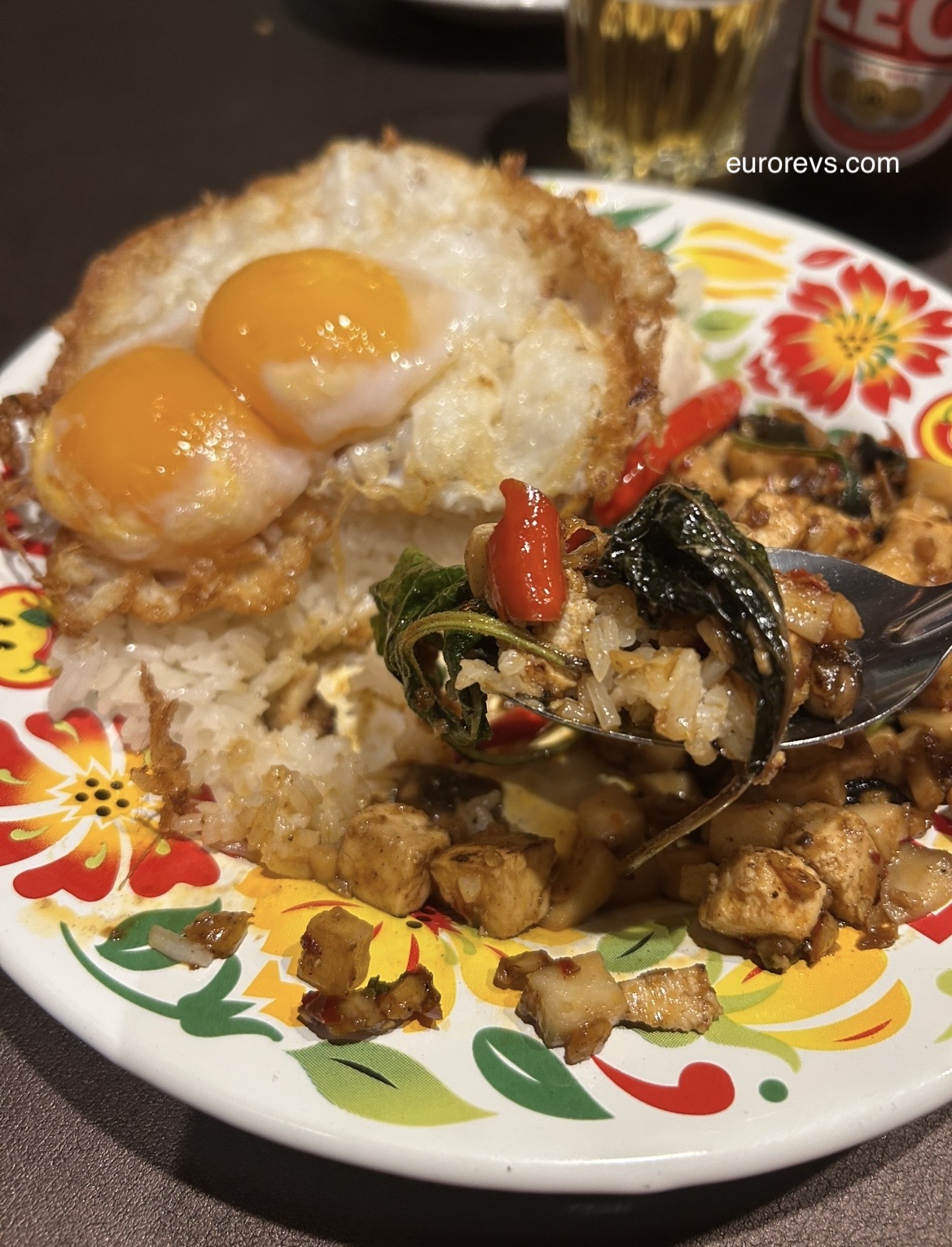
    Cubed, slightly firm tofu with; button mushrooms, warm red chillies are like toasted cracked black pepper. Nuttiness come through, which get set on fire by slices of unseen cooked birds eye. Visible are a whole 3 chillies in the mix. Nothing like half plate of them on the “level 10” in Phed Mark, Bangkok.

    As I travel on this Thai spicy pop-up experience, I’m aware of a couple of things. Chef Gigg creates Wien’s rendition, as well being the co-founder of Phed Mark. Acclaimed Thai celebrity Chef Gigg aka Kamol Chobdee-Ngam owns Lerttip Restaurant, with several branches, in Bangkok Thailand. Lerttip’s menu is longer, with an emphasis on pork, as well seafood dishes.

    Gaprao elicits not a whisper of steam, on its arrival to me at Phed Mark. Not least due to a cold plastic plate it rests on. Cooking timing feels off. The egg fry is barely crisp on the outer edges, leaving that rubbery egg white texture. Hard to dissect it with the metallic cutlery, provided sans chopsticks.

    Photos online look one way. The immediate taste experience that lasts with the paying customer, another. It is the one that matters most.

    Continue to plough through, I do. To the finish line! Which is not altogether a task, for me. Pepper announces itself, after a couple of bites. Phed Mark on a plastic plate: a spicy Thai pop-up experience. Ever curious for plot twists, I get the appeal now.

    Prik Nam Pla: Pad Gaprao condiment

    Only one table top condiment, in a pretty a pot is available. Prik Nam Pla. Right up my alley? No, not this one, sadly. A flavour error. Sea water, basically. A big gulp of it. right when it was all smooth sailing.

    Rice with stir-fried tofu and chili, topped with two fried eggs, served on a floral patterned plate
    Gaprao with Prik Nam PLa

    Expecting tangy; bitter, lime, fermented fish flavour. Fresh cut chillies, obviously. A hint of garlic coming through. None of that is what the Prik Nam Pla they’ve got here is. What went wrong here? Twas either a flavour enhancer nor reducer but an annulment with my appetite.

    What does Thai Holy Basil taste like?

    The basil could be crispier. Don’t you just hate the stringy texture of an item of food you’ve committed to swallowing? I couldn’t eat artichokes for years because of this. Green beans too. Those were bark-like whereas this gorgeous herb shouldn’t do that coming straight off a hellfire street food style wok.

    I digress: my point is that Holy Basil is earthy. it is the true chosen fresh herb in pad gaprao where red bird’s eye chilli accompanies it’s clove bitter undertones. Thai basil is sweeter with a flavour profile that includes notes of aniseed as opposed to the warmer clove in Holy Basil. I wouldn’t be surprised if this was as the London menu says – basil.

    When a fresh herb is used in cooking it speaks gently to your senses. Soft spoken tones that are measured so you take everything in as cultured nuances invite you to do so. Like back in times before influence shouted at you to provoke response through sensory prodding video media. Pronounced yet delicate: that is the tone. Dried herbs are like spices, louder; a sprinkle goes a long way. They bloom in hot oil.

    Review of Gaprao at Phed Mark London

    I polished off most of my plate bar a bit of rice. A nibble of the spring roll was had. It’s almost enough to say there was any left for me to try as the appetisers were tiny. We, the spring roll fiends, agreed that they were dire. Sickly sweet sauce on top of thin rolls coating, perhaps one grating of carrot. I am told the chicken satay sticks were “OK”. Let’s move on!

    I’m not bothered about having gaprao with chicken or duck egg. Two things, however, bother me a lot. The first is cold, rubbery eggs. The second is I’ve seen several videos where Wiens is in the Bangkok restaurant kitchen, gleaming with pride at his Phed Mark cooking method of the eggs. We’re invited pay extra, as a customer, per egg added.

    Mark Wiens’ Signature Duck Egg Gaprao Dish at Phed Mark

    The whites are separated from the yolks in Bangkok, Thailand. If you want to, you can see this here in the kitchen with Wiens and David Hoffman from the 11:22 mark. My first plate arrived with one egg before I received the extra egg I paid for to.

    The whites are deep fried to create a luscious crisp. Just before serving the yolks are gently applied atop the whites, in the wok, before being directly scooped up and plated. I’m guessing this is not a separate plating station in London as it appears in Bangkok, Thailand – for obvious reasons. The duck egg yolk is richer and gamier in flavour so it acts as a respite from the enormous amount of fresh, cooked and whole birds eye chillies they add to the number 5 spicy in Wien’s restaurant in Bangkok.

    Bits of chewy basil are passable, given my expectations, at this point. Live another day ingesting basil, of all varieties, I say. Better not to lie: keeping it as just “Basil” on the menu too; so props for that.

    Deep frying basil; piling it on top of Gaprao may work treat. Frying with regular, or Holy basil. Something to try to recreate, if like you’re like me. Keen to try new things in restaurants. Street food certainly is challenging for any home cook. Mise en Place, or expect to fail, with Pad Gaprao: a cautionary tail, one suspects.

    I’d go for Thai Tiger beer. Served ice cold: the juxtaposition with spicy foods goes down like egg yolk atop almost anything. Thai Leo beer didn’t do it for me. The bitter Tiger bite in the Tiger simply pairs such complex dishes scrumptiously. A beverage suggestion wasn’t provided: my server didn’t drink beer. The Leo beer was a bit too malty for me, personally.

    Overall, my ratings based on my my opinion of the Greek Street Soho London pop-up of Phed Mark when I visited in May 2026:

    Food – 5.7/10

    Value for money 6/10

    Vibes and service – 5/10

  • Le Vacherin Review: Is It Worth Your Money?

    IS LE VACHERIN THE BEST FRENCH RESTAURANT in Chiswick, West London? London’s Côte chain finds a home, apparently, in Chiswick. La Trompette is Le Vacherin’s only independent competitor in Chiswick. are their sole competitors. Is the answer to this question of interest to anybody at all? I mean, besides Chiswick and nearby Ealing locals? Whom a hankering for French food they thus posses.

    The question that really matters is: what is the best French restaurant in London?

    Reviewing a French Restaurant in London: Le Vacherin

    Meriting 2 AA Rosettes – accompanied by removal from the Michelin Guide, as of February 2026 – places perspective, somewhat, to preface what Le Vacherin is today.

    Restaurant interior at night with tables set for dining and warm lamps visible through windows
    Screenshot

    Authentic French Food in London

    I arrived, shaking off London life’s fetters, to find a stale, empty space. The chaos in my head had calmed and like a wounded NHS patient in A&E, I heard my name. It’s either good or it’s bad. That is what makes that trip to the table, down the hallway, heavenly hellish, in the most delightful way.

    Hollow interiors mirrored faces that I hoped would not be in contact, nor the vicinity, of anything I was about to ingest. Hollering into a metal tube under Golden Arches appealed more. Did I want to eat anything transposing whatever it was making me shift my eyes away from theirs promptly, to stare into my empty bread plate? No. It had me yearning, however, to shake up the evening – eat it anyway.

    Authentic French food is regional cuisine, much like authentic, local dishes are served in homes or restaurants across Southern Europe. Regional distinctions are honoured, existing harmoniously with tradition. Traditional French food upholds classical cooking techniques; honours the home cook, uses seasonal, local ingredients.

    French equivalent dishes to gelato, (Neapolitan) pizza, (Roman) pasta (carbonara) are Beouf Bourguignon, Duck Confit, Coq au vin etc. Butter rules in cooking over olive oil; wine in and with food fuels competitive Mediterranean inferiority complexes; cheese is an ingredient, a course, a dessert, a cause for – wine pairing? – or raison d’être of the sommelier.

    Best Restaurant locations in London for dining

    London is rife with global cuisine offerings. Street food markets in London are aplenty. Vast competition for the best restaurant in London is sought after in places like Soho; Shoreditch, Mayfair.

    Menus with vegetarian options; vegan food, local, ethically sourced produce, as well as nose-to-tail dining, offer a plethora of choice for restaurant lovers. Instagrammable restaurants in London or Celebrity restaurants like Hell’s Kitchen, are growing in popularity. Highly competitive; multicultural chefs, work in restaurants, with rent prices ever on the increase.

    Authentic French restaurant menu in London

    Words like authentic, to us Londoners. is akin to a Budget Airline Euro weekend trip. Suggest an authentic French brasserie in London to us? Rather we’ll avoid this steaming pile of risk on our dinner table. Particularly, when parting ways with hard earned cash. To be immeasurably disappointed abroad is one thing. To seek respite from the real world, only to find oneself trundling back to a full sink at home, is quite another. The paying customer.

    Thus, restaurants in London like words like “fusion” or, “in the style of”, when describing themselves. “Classic” or “authentic” is sacred. Unless the chef knows what he’s talking about, or the restaurant is one your (great) grandmother may have frequented.

    A French restaurant in London will be one, or a few, of these things: French style; French Bistro faire i.e. Parisienne Bistro copy-paste in their (primary) menu offerings. Either a French chef, or someone who studied French cuisine under a French culinary master, will be in the kitchen.

    Le Vacherin in London: a French style restaurant review

    Many an oyster has graced me. I merit the oyster – it being my first foray into raw seafood, not ever thinking there was any other way to eat an oyster – but raw. These, we are faced with, are a disgrace.

    • C
    • £49 Dozen Maldon Rocks Oysters in Chiswick le Vacherin

    They are not good. Expensive to boot. (£49.00 for a dozen) What can I say? They’re still stuck on the shell, by the adductor muscle. Not shucked properly; served lukewarm, on dubious looking ice, as if it were an afterthought. Must I go on? They are as flaccid as this tick-off list is boring – rather than being the meaty bite a fresh Rock oyster yields. No matter the size.

    There is no description other than “Maldon Rock” on the menu. This trifecta of Rock variety, distinguished by size are, by the way, the most cost effective when sold in bulk.

    Eatings Burgundy snails Escargots in London

    I’m not a snail snob. The escargots you eat in a restaurant come from a can, most if not all the time. £28 for 12. They get stuffed into shells you can purchase online. Timing, sauce and bread.

    We tend not to know that, when we have good escargots. The way they’re planted back into the shell so stay juicy. The joys of prying them out by tiny. The magic that haves us believe the shells we see on the plate, were, in fact their homes.

    The latter; the sauce, is appreciated by bread that serves as conveyor belt, a delivery system, if you will. When you order escargots à la Bourguignonne every drop of the garlic, parsley, buttery sauce is delivered for your tasting pleasure by the bread.

    Every lick of garlic butter, (shallot), parsley elixir that – if like me – you’d vacuum or hoover with pleasure; it’s right there for the taking. Escargots à la Bourguignonne in London can be exquisite below or ever so slightly higher than this price point, for this reason. We’ll come full circle on this point and the price points in general throughout this restaurant review.

    Some restaurants pride themselves on providing information on their menu as to where their product is sourced from. That includes snails. I’m only mentioning this as it came to mind that hands in a kitchen opening a can, any can, demonstrate either or all of the following. Take pride in the travelled food product, demonstrate that by elevating how it will be tasted immediately after preparation.

    The snails are sad. Their fate was to be swimming in sauce, mopped up by delicious bread and eventually savoured. Instead they are parked wayside by some other snail’s home, shrunken to rubber resembling a chunk of chewed and spit out tyre.

    I’ve never attempted to cook snails this way but I suspect, as they slid out too easily by fork, they weren’t stuffed properly and so were have baked in butter, rather than steamed and baked in the shell.

    French charcuterie

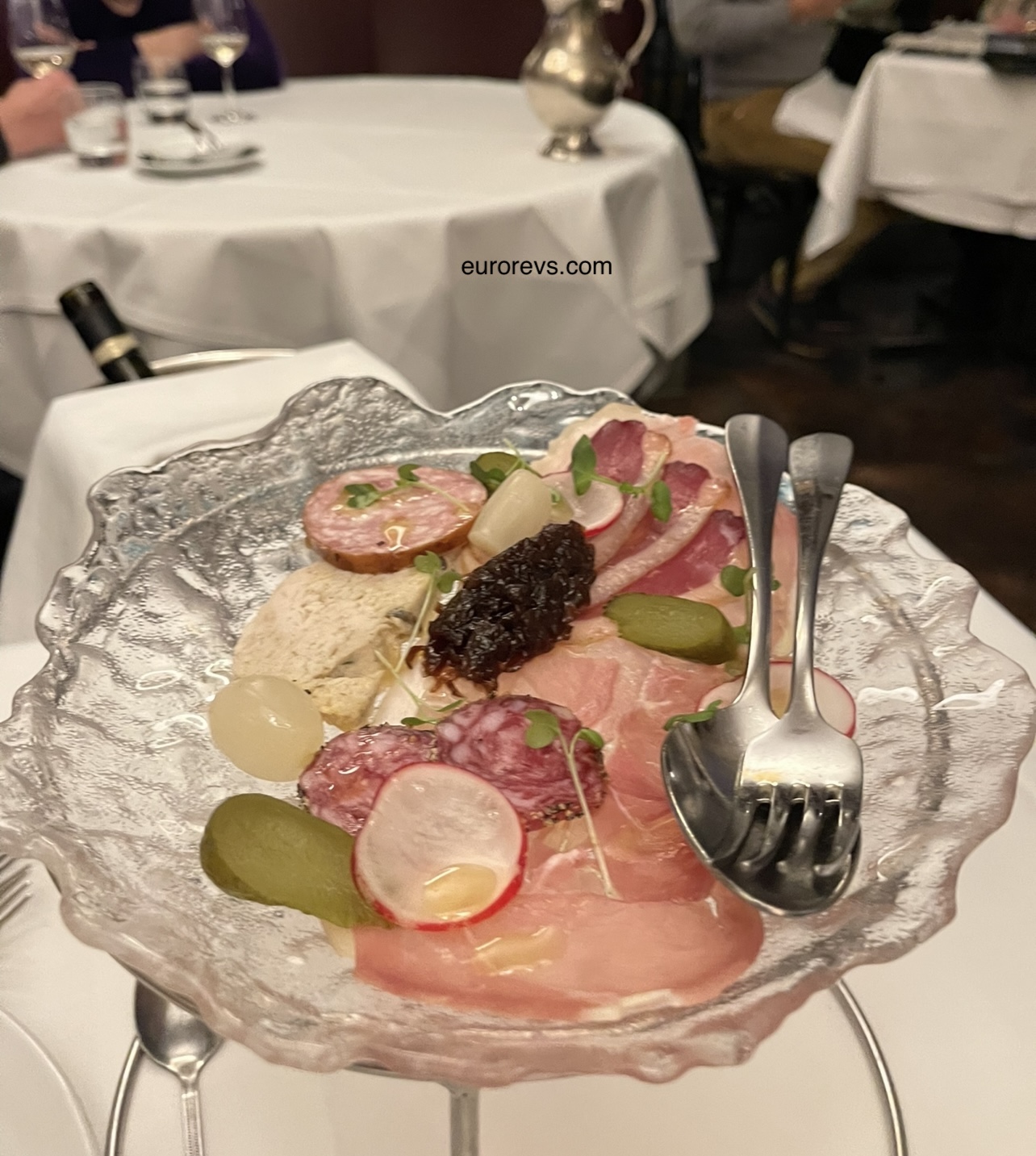
    I didn’t try these these dishes and they have since been taken of the current menu. You can see the full description of these dishes in the pictures with my menu above.

    • French restaurant London
    • Smoked duck breast, sausage Morteau, saucisson, foie gras and chicken terrine, jambon cru
    • Velouté with smoked duck breast

    Jerusalem artichoke velouté with duck magret

    Portion sizes aren’t sharable. Jerusalem artichoke velouté, I’m told, is perfectly acceptable. From the image above, it arrives with Magret de canard, which I believe is smoked. Magret de canard is a by-product of fois gras; the Muscovy duck or breast fillet of fattened Moulard. Prized for its thick layer of fat, I presume smoking it will shrink or diminish most of the fat, judging by the plate.

    Truffle is included, mind, it makes me re-think my lens prescription. Couple of black dots? I don’t taste these dishes, so I emphasise: no more can I say, other than; £17.95, £14.93. On to the mains methinks…

    Offal Restaurant Menu London

    Nose-to-tail dining – a cultural norm born of respect, for the animal killed or cucina povera (Italian peasant food), eating out of necessity. A City dwelling consumer of animal, may interpret this nose-to-tail dining as a gentrified means of eating prized parts. A snout; brain, exotic menu items, made trendy by Fergus of St John, where one can try such tasty luxuries.

    In spite of Fergus, eating offal is appealing to those who travel to eat. Looking beyond Chinese Szechuan hot pot intestines; tripe, Chinese BBQ, finding offal on London menus is tricky. Wanting to try different cooking methods of offal cuts of meats, outside of Soho, London, isn’t impossible. Difficult, more so it is, with ever changing menus, however.

    What’s in and around the whole head of an animal. Guts that line British sausage casings. Where are the actual guts; the innards, eaten as a standalone dish; in frequented mid-price range London restaurant settings? The upper and lower gastrointestinal tract, tripe etc. Liver and onions. Devilled kidneys. Haggis. Once cheaper than a bag of chips on a Friday.

    They’re still cheaper than dry aged cuts of beef or Dover Sole. So, they reside, nestled menu-side by Gurnard, calves brains, pig ear – in high profit margin spots. Talked about places – you catch my drift.

    What are Rose Veal Sweetbreads?

    My plats principaux order of sautéed Rose veal sweetbreads isn’t inspired by any fad. It is, simply put, my desire to order a dish I don’t cook at home. Which, I’ve mentioned before.

    I ask our singular server (as the rest have faded into the background) what she thinks of the dish. She has no idea – hasn’t tried it. No other member of kitchen staff is proffered up to chat to me? Shake up this evening, I said and shake it up I do – allez!

    Each individual aspect of the dish is divine bar the star of the show. I prefer milk fed calf – (8-12 weeks old), less ethical to the older ethical   (6–12 months)  Rose veal calf fed on milk, grass straw.

    Cottage cheese blitzed with boiled egg white, is visually and texturally remiss of these sweetbreads. I suspect it is the cook that has corroded my maiden experience of sweetbreads consumption. A boiled, porous, firm tofu. This would have what is on my plate reeling in an identity crisis.

    One thing that makes Le Vacherin, in any way, French to me is sauce. The good thing about tofu is it carries sauce like a sponge. Dipping it, like a French Fry in ketchup, with every bite was the method I went for. The condiment, no, sorry, slightly syrupy sauce à la Viande and accompanying saline snaps of caper, made most bites edible.

    The Boudin Noir croustillants that came with the Rose Veal Sweetbreads, were sublime. On their own. The overall pairing with sweetbreads et al screamed lack of confidence. Why not just deep fry the main and equal sweetbreads portion and add the boudin noir to the sauce for depth of flavour?

    The fries were camera and salt shy. Neglected. Devoid of structural integrity. Served quite cold and frankly, as meagre in portion as they were limp. The fistful of green beans under my sweetbreads had more bite.

    French Bakery in London

    Here’s the thing I’m up in arms about. There is a deli online. Selling French things – from this very restaurant no less. A bakery is pocket of gold in London. Be it a French bakery in London, or anything that isn’t Gails bakery or Bread Ahead et al: perpetrators of coddling and raising sourdough starters. Once a product of their environment during Covid: infiltrating the minds of a Nation, with nothing to do, erasing memory of non sourdough based broken baked bread at the table.

    It brings me to mention the obvious, which is, that I was not dining alone. I am forced to regurgitate the tail of the sad snails too: with no delicious bread, their final wishes were denied even an ounce of deletable decency.

    Why is French Bread so Good?

    French bread is a thing of National pride. It is something that was made to be affordable to all at one point. It is still supposed to be a God given right that no one is unable to eat good piece of bread daily. Pay a visit to your local boulangerie in Paris – the most expensive City in France – and this pride, all the traditions, are preserved. Intact. Gloriously.

    Beyond a baguette there are 13 other types of French baked bread you can find in a boulangerie in France. I haven’t paid for bread in a bread basket – dining alone or in a. group – in France at a restaurant. The first is typically included in the price of the meal, generously filled or added on as a “table charge” in the receipt, which table charge, which covers bread, linens, and service. At Le Vacherin I don’t recognise whatever cold, flimsy, dry offering they provide free (then at for £3.75 per subsequent portion). The first portion for a table of 5 is shown the photo slide above

    Whatever it is, it is not one of any of these 14 French breads – and this French style restaurant, sells bread or mainly bread flour via its online deli linked on the same restaurant page.

    What are Classic French Desserts?

    No one was keen on a dessert but I quite fancied a Julia Roberts as a restaurant reviewer moment in that movie. Crème brûlée bite on a fork after a light tap, a crack and a cat who got-the-cream response rendering a heaving a sigh of a approval from the restaurant staff.

    As Cher would say in Clueless – as if. It was just me, the only non dessert eating diner who bothered to give it a go. It was known by the staff (as they asked- not sure why) to be the birthday of one of my dining companions. We were charged for the unfinished crème brûlée which, if anything, had me hankering for a Bonne Maman.
    I craved redemption. A dish that, in its entirety, tasted good. Crêpe Suzette or profiteroles, a macaron – something, anything from delights that France has to offer by way of a sweet treat… That in this case could have erased some things prior, that were best forgotten.

    Dining in Chiswick West London

    The majority of dishes on the menu at Le Vacherin don’t include a carbohydrate component. Below are some dishes I didn’t try (mostly due to portion size, noncommunicable feedback on the food in general). My fellow diners are pretty big eaters, generous to share anything particularly delicious and no one cleared their plates or said anything about the food throughout the course of the evening.

    Executive chef Marc Wainwright’s menu changes so, it comes as no surprise that lots of these (particularly all of the above) are no longer on the current April 2026 menu.

    London fine dining restaurants

    There are times when recalibration is required of us in order to learn, re-learn, enjoy and appreciate things for what they are now. A palate cleanser, for example, is not sufficient, due to current circumstances. Bad food might do the trick.

    Lack of care, poor quality ingredients, demotivated staff and an atmosphere so forgetful that you began to wonder, contemplate deeply, if any of that mattered unless it was the only thing that did.

    Do we pick restaurants based on reviews, menu items based on their price, as with most things in life? Of course not. Here is where I may lost you, my friend. Before you go, I wonder where you frequent, wish to return and why.

    Review of Le Vacherin Chiswick 2026

    Overall restaurant ratings based on my my opinion of Le Vacherin when I visited in February 2026.

    Food – 3/10

    Value for money 2/10

    Vibes and service – 4/10

    Read more:

    Lunch for under £5 in Central London

    French Food in London – Paris Bistro style

  • Discover London’s Charcoal BBQ Delights

    Date of visit Feb 18th 2026

    CHINESE BBQ IN LONDON is growing in popularity. Meats on skewers; charcoal BBQ delights, with beer from any frosted glass container, is that thing we need to connect.

    Charcoal Champ Chinese BBQ storefront in London, exterior view of the restaurant with signage and entrance.
    Chinese Charcoal BBQ delights in London

    Pierce almost any food stuffs, with something sharp enough to go through it, that’s safe enough to eat off. Use that to turn it over a charcoal BBQ station. Serve it seasoned; or with seasonings on the side, a cold beverage, people watch. Phones are set aside; people lean in to each other, to share more than good food. Friends; family, sitting in relaxed gluttony, is fun. Ordering said food stuffs for no one but yourself? Great, also. Without compromising, consideration of fellow diner’s tastes, a charcoal BBQ menu is an island. Where there’s less wait time, less fuss: paradise on a plate might just arrive.

    A Quick Guide On Regional Chinese BBQ Cooking Styles

    North East Chinese BBQ skewers (shaokao) shed a new light on London’s Charcoal BBQ delights for me. China Town, London, is where to go for roast meats: Regional Cantonese Chinese GuangDong BBQ.

    Cantonese BBQ aficionados craving siu mei (燒味) specialities; roast duck, goose, char siu – pork belly, siu yuk – crispy pork belly. East London takes grilling skewers over charcoal seriously, as can be seen here. Totally different from North Eastern Chinese BBQ methods.

    North East Chinese BBQ (Dongbei Shaokao) is grilled over charcoal. At Charcoal Champ Chinese BBQ, the variety of skewered on offer all went well with beer. The atmosphere is as lively as it is casual: its a street food from the region of Dongbei, China. If I didn’t know this, Id’ feel it. As soon I walk in, the chatter; aromas, warmth from torrential rain we escape from, I feel welcome. No reservations: bliss.

    Charcoal Champ Chinese BBQ – A Restaurant Review

    First to arrive are the prawns. Phew! They work up a thirst. As drinks arrive well before any chargrilled morsels of food, it’s not ideal. Humouring me is their tidy drinks menu. Basically, bottled beer starting at £4.50 a pop, excluding service charge. That, or lethal spirits; clear Chinese wine. Ask for glass; a banana yellow, child-sized plastic mug appears.

    Charcoal Champ Chinese BBQ storefront in London, popular Dongbei-style barbecue restaurant for Chinese students and visitors.
    Prawn skewers – London’s Charcoal BBQ Delights

    Charcoal grilled skewered prawns are dusted in salt, msg or bouillon. Eating the entire prawn shell-on is, apparently, the way to go. The body was tiny and hard to detach from its exoskeleton. Smoky (white?) pepper came next, stabbing the back of the throat. Munching through, I race my pace to find a tamale stuffed prawn head. If any sweetness were to balance salty spice, I figure I’ll it find it here. Shell, eyeballs and all.

    Unfortunately, there was none, or it evaporated in the charcoal smoke, which came through and was lovely. Next bites were smothered in salt; pepper, chilli, garlic, amplified by persistence to take on that tough shell, which wasn’t as thin or as crispy as I hoped.

    Charcoal skewer grilled Pork Intestine – Dongbei Style

    Grilled pork intestine stuffed with a partially cooked through garlic clove: yes, please. We’re talking teeth sinking into textural wonderlands. It’s saliva inducing. The slightly salty fat spills uncontrollably as you burst through the every layered bracket before hitting the middle sweet, plump garlic clove.

    Charcoal BBQ Oyster Mushrooms at Charcoal Champ Chinese BBQ

    The smoky skewers umami: oyster mushrooms are seasoned to the max. Salt, garlic powder, cumin, chilli powder. Looks-wise, they can pass for taste. In fact, they’d confuse a carnivorous BBQ expert in a blind-folded taste test.

    Dry rub flavours don’t compare to Cantonese Chinese BBQ pork belly or char siu (叉烧)  in Cantonese (cha shao in Mandarin). They’re like night and day. Easily accessible in China Town – Cantonese Chinese BBQ is famous for its sweet BBQ glaze. Hoisin sauce and Chinese five spice powder. It doubles down hard on that sweet-savaoury flavour profile, remiss of Cantonese cooking I’m accustomed to.

    Roasting, nutty sesame aromas are enhanced by oil blooming dry spices, in this Dongbei style of BBQ. Whereas glossy sheens saturate finished products of tasty, Cantonese BBQ roast meat flavour. Charcoal-grilled Dongbei or North Eastern Chinese BBQ skewers scream smoke and salt by comparison.

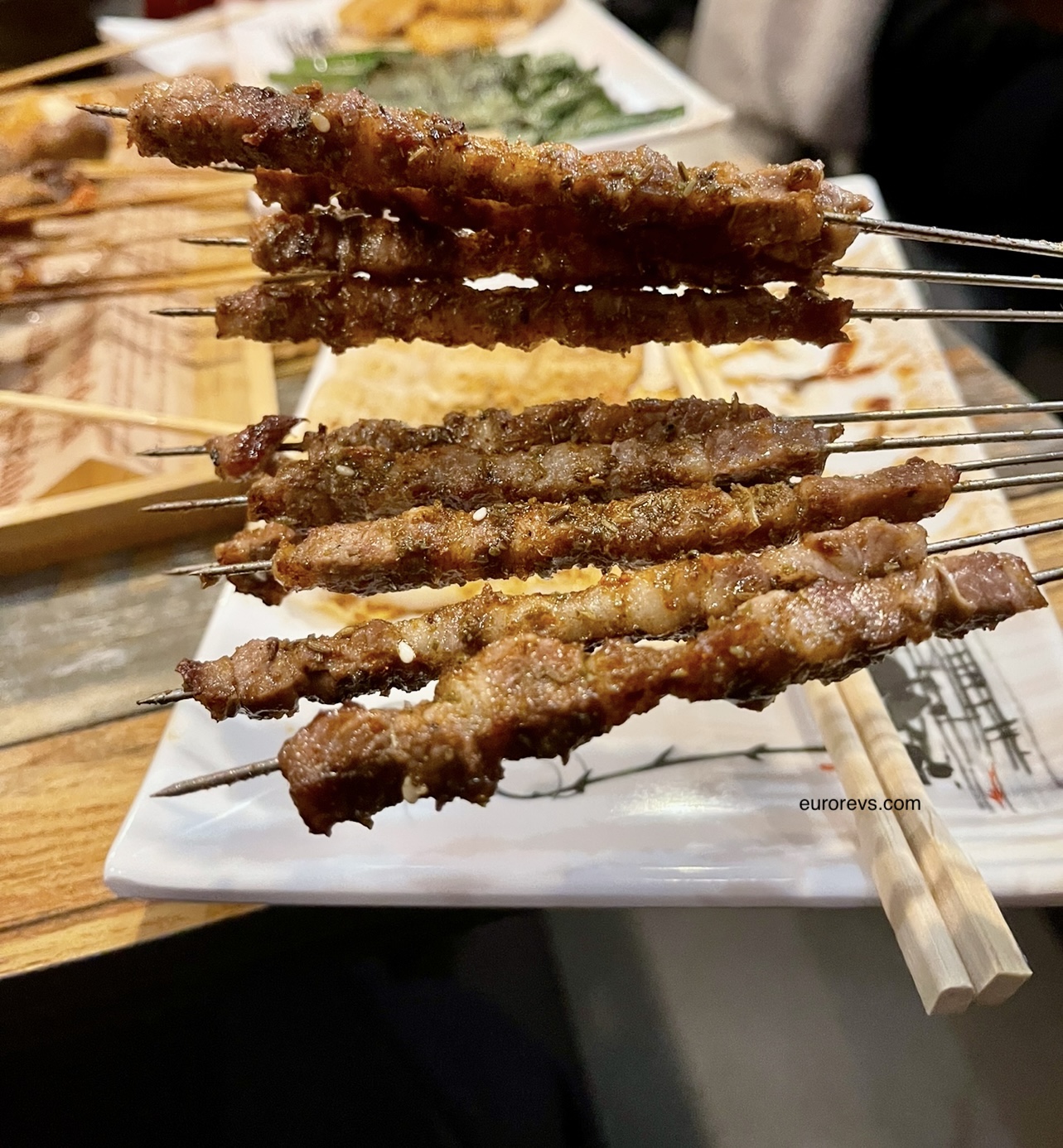
    Lamb Skewers at Charcoal Champ Chinese BBQ

    Just when you see yourself at the finish line, flat as a starfish on the sofa, the richness dissolves. Then it’s round two. Sweeping skewers of charcoal lamb and beef appear. Fragrant, nutty, meaty bites. Delivered directly to mouth by barely a toothy tug. Char, chew a plenty: as you see from the ten small lamb skewers (above). Those juicy squirts from rendered fat snap you back to task. Keep going.

    North Eastern Chinese BBQ Beef

    Skewering, by alternating meat and fat, seems held off a tad on this beef version. Traditionally, the BBQ method closest to Dongbei style; Xinjiang-style shaokao method embraces it.

    It could be more rendered due to palate preference, beef quality (which is more likely given the beef skewer price). As discussed below, vehicles can cut through it, making the overall dining experience more moreish.

    North East Chinese BBQ skewers in London that include spicy chicken wings grilled over coal.
    North East Chinese BBQ skewers in London

    Chinese BBQ Chicken Wing Skewers

    Each charcoal barbecued chicken wing is a majestic, juicy, dark poultry present, wrapped in umami crunch and BBQ smoke. The bones feel non-existent – they’re that good.

    BBQ Chinese Chives

    The charcoal Chinese chives are leek-like, with a toned down fresh young garlic savouriness. The spice blend measure out to balanced sweet and salty side dish. A bit more chewy than I would like – but a much needed break in colour scheme of stacked skewers.

    Chinse chives charcoal grilled Dongbei style
    BBQ Chinese Chives

    Chinese BBQ side dishes

    Roast, toasty skewered rice cakes bring diversity to the mouthfeel and flavour. This version tramples upon any monotonous, gummy, single flavour profile I’ve experienced with tteokbokki (Korean rice cakes). The cheesy sweetcorn was a much needed respite from the spice for my dining companion, who devoured them with enthusiasm. Apparently, if you catch a member of staff to make a note before you place your order, you can ask for milder spicing.

    A pairing of a pickle or two wouldn’t go amiss. Something zesty, cooling, to cut through the elements. Rich BBQ pork intestine; rendered lamb fat on the lamb skewers, for instance. Or the monotony of bite after same bite of meat. I’m nitpicking, at this point: I prefer it, particularly alongside cold beer. Fresh chilli to crunch into, to aid the hunkering down to an education in dry spice flavour, in a single sitting. Unless you eat raw garlic, with as much gusto as proper piquant pepper, this may be a step too far here.

    With a dry rub skewered affair, I’m partial to a side of salt and pepper in a dipping bowl. To make up my mind and scald myself for it, regarding how much salt, please and thank you. A bit or crushed cumin, some chilli flakes to dip into. That kind of thing. Find my rhythm, rather than committing right away.

    Charcoal Champ Chinese BBQ Review

    A NOTE REGARDING VALUE FOR MONEY: These prices are extremely reasonable for London, with some caveats. Those being; limited drinks options, with them being served typically immediately, on ordering, well before any food arrives. We requested tap water but it did not arrive, so I cannot comment.

    This is a thirst quenching meal with no options but to buy bottle after beer bottle. A service charge is applied, in spite of orders being made by mobile device. It’s applied each time you place an order, which can add up. Be prepared or enquire with the staff further about it if you’re not sure how much to order.

    Ratings!

    Food – 7.2/10

    Value for money – 7.8/10

    Vibes and service – 8/10

  • Exploring Chinatown: Dim Sum Review at Joy King Lau

    MY LOVE OF DIM SUM transports me to where it started. Not just my love of dim sum. Chinese food devoid of beef with broccoli. Specifically, Chinese Cantonese food in London. Cantonese classics designed for whatever time of day you fancy: yum cha.

    Giles Coren once said “I love Chinese food above all things”. You know, as he does. Before going on to say: “Indeed, if I lived in China, I would never leave. Even if I was allowed to.”

    Date of visit 15 January 2026.

    Off to Gerrard street I go, or rather just off it. Joy King Lau on Leicester Street, in the District of Soho, London. Man is it buzzing before The Lunar Year. Take it from me, or a random queuing in front of me. They’re repeating this information into their phone as if it’s unheard of. Three unimpressed teenagers beside the news broadcaster look down at their rain-soaked trainers.

    Joy King Lau is about 12 steps in front of a bustling See Woo. Prices went up in See Woo: it’s only fitting I overhear West London mummies chide their children there. Done, naturally, Waitrose tones that pretend to whisper. At See Woo such mummies emphasise to all of China Town that packet noodles are full of sodium. Which is bad.

    MSG is hidden in the noodles. Stay well clear. A cautionary tale that keeps their boarding school bound children curious around kitchen kettles in dormitories and away from golden arches. Then further away and more intrigued, by extension of taking lengthy gap years.

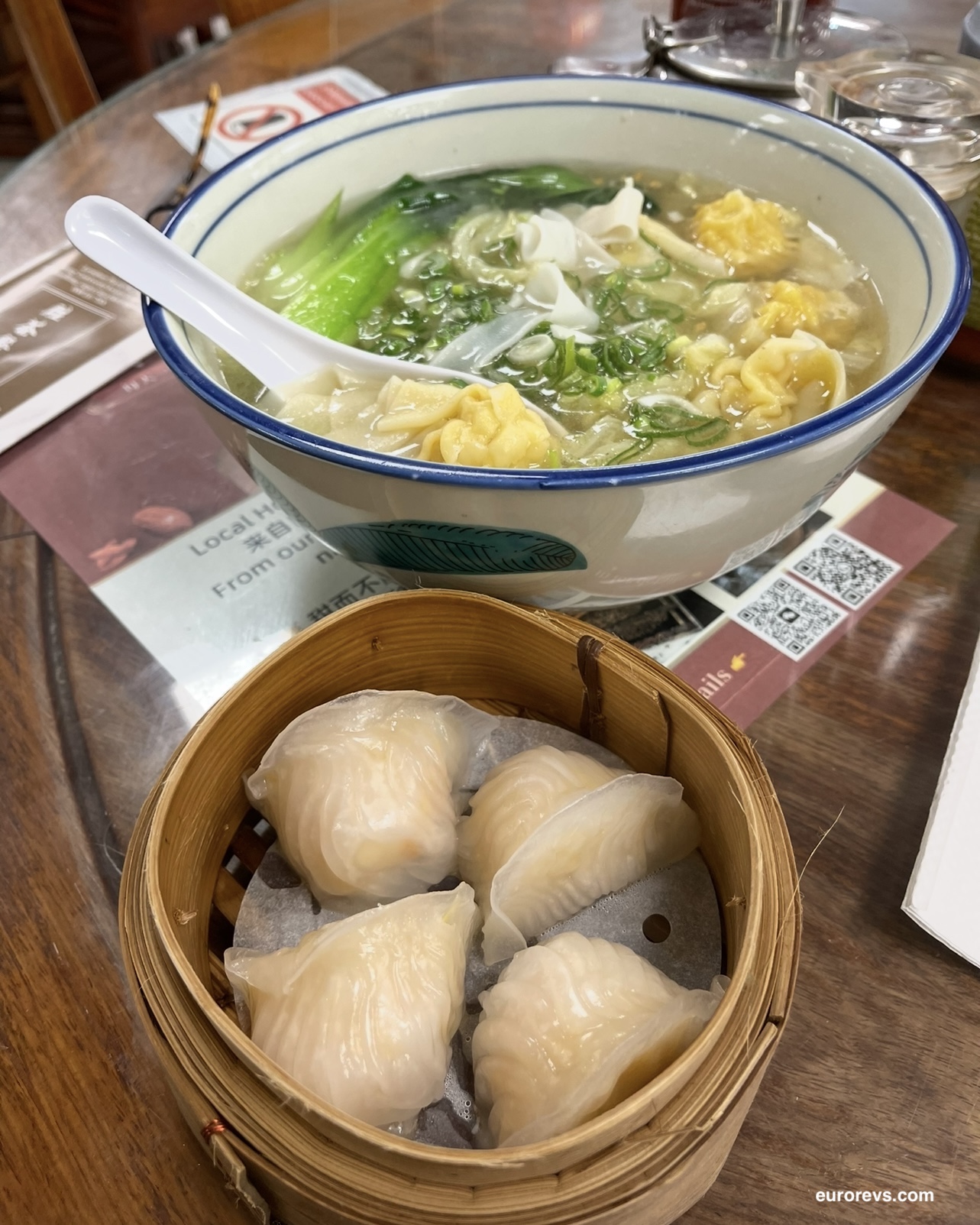
    Steamed shrimp dumplings in a bamboo basket with one being held by chopsticks in Joy King Lau
    Har Gao Prawn dumpling in China Town London

    What does MSG taste like?

    Mono Sodium Glutamate Umami flavour hits a dish with deep savoury notes. Like parmesan cheese, sprinkled atop a pasta or caesar salad. Enhancing inherent flavours of the dish its sprinkles are interspersed with, it encourages them to rely less on salt.

    Think nutty roquefort; walnut bitterness, both foods naturally high in glutamate. Naturally occurring glutamate in tomatoes offer a milder taste comparison to MSG seasoning’s capacity for flavour enhancement. That glutamate naturally occurs in foods we consume regularly in the West, while palates treat themselves to addicting snacks and condiments laced with MSG, speaks volumes.

    Any way, Chinese New Year is upon us: See Woo tills are rolling up those paper receipts as fast as Germans scan foodstuffs at Lidl daily. Time to eat some Cantonese classics in China Town.

    Dim Sum Review of Har Gow at Joy King Lau – Chinatown London

    Mention of dumplings comes from a loving place. Fascinatingly drawn to them; architecturally, texturally, their tea adjacent appetite inducing aesthetics, they’re as reassuring as a hug.

    Har Gow at Joy King Lau doesn’t entice at first glance: fewer dumpling folds means visibility to prawn filling. Aromas are there, as well as the steam we want to see.

    The façade is real. King prawn dumplings throw me off. There’s an adhesive slick of prawn mayo flavouring. It’s as though the filling were a pink striped fish ball disguised in the shape of a prawn – a bit odd . The bite of whole or chopped prawn is there: they’re not even chopped up, in fact, which is the style sometimes. Perhaps the thicker wrapper with fewer pleats lends itself to the gummy texture overriding the dumpling chew. It offers an eating experience with underlying pure prawn query.

    First to arrive was another dish, however. There’s a gap of around 20mins or so between when I receive it and all the other four orders I place.

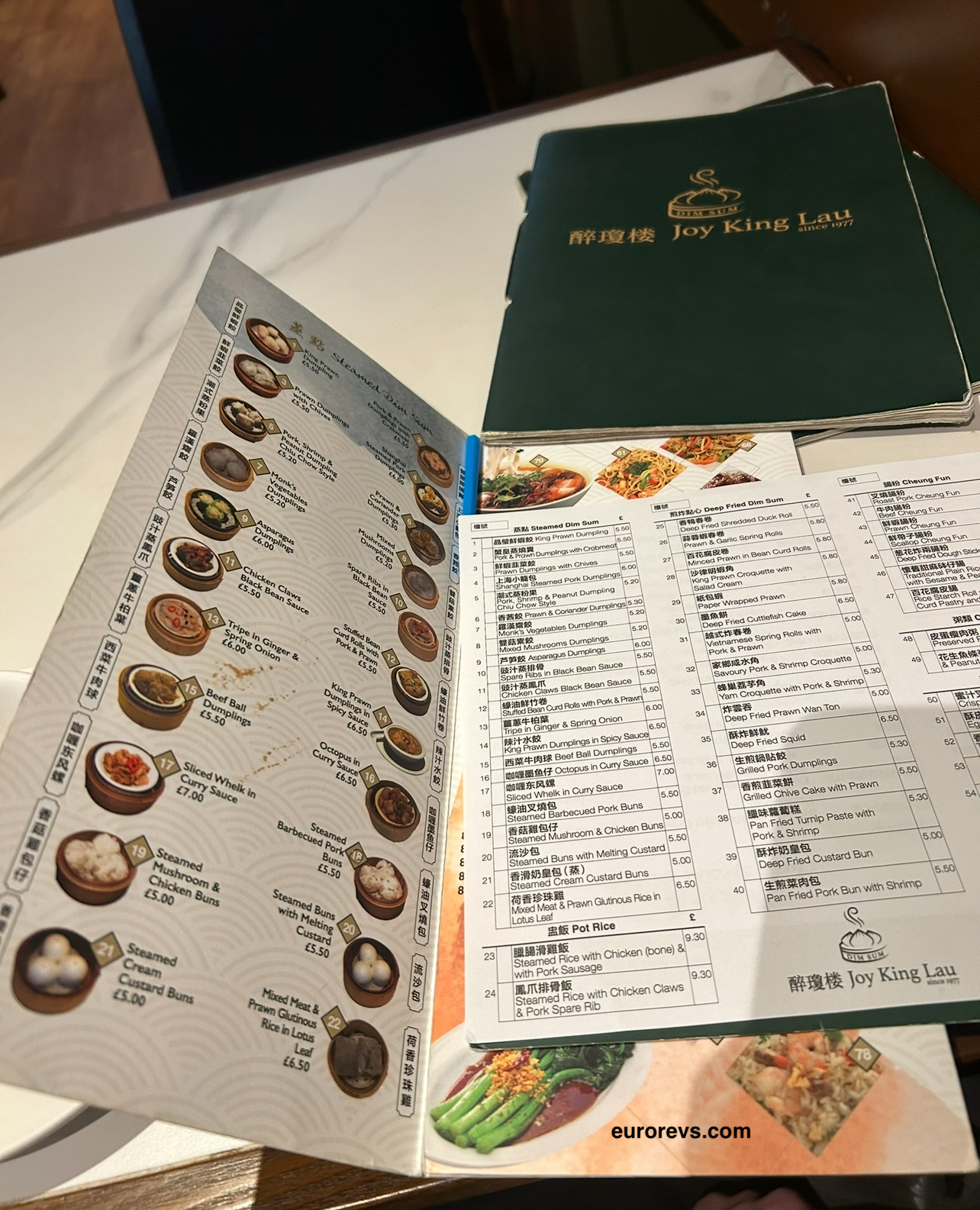
    Dim Sum Menu at Joy King Lau

    Amusement kicks in picking up the pen to apply it to the paper dim sum ordering menu. Participation, is the sense it gives me. As diners are we taking part in an exam, unbeknownst to us? Will our servers determine the doctorate holders in this particular China Town establishment? Who demonstrates sagacity in the discernibly noble, yet humble, practice of picking dim sum to yum cha?

    Braised chicken feet dim sum with red chili slice in bamboo steamer basket
    Phoenix Claws in black bean sauce

    Neutrality across their faces as they collect papers to pass to the kitchen summons a tremendous jealousy in some. Without rhyme or reason everyone is envious of everyone else’s orders. There’s no tell-tell sign by servers – trying not to laugh, for example – so we double check we can order more. Just in case, you know. As if that puts power to pencil and paper, rather than kitchen. Steamed in basket or plated cold, a feast is upon us.

    Phoenix Claws in China Town London – Dim Sum review

    Phoenix claws or chicken feet in black bean sauce arrive with all of my multiple-choices. All at once. Each claw in split into half for ease of eating, as is expected. They’re have a similar flavour – as well as that bite to the bone mechanism of consumption – to the chicken wing. Texturally, they are more comparable to a braised pig trotter. The chicken feet envelope the sweet, savoury umami notes that the (most likely jarred) black bean sauce brings to the dish. These were good, very good indeed. A generous portion too, at £5.50.

    How to Eat Chicken feet

    As you would with a wing, get messy. With your clean hands suck, savour, spit the little bones out. They’re a textural sensation full of fatty unctuousness, that pairs well with a beer. A smacked cucumber salad with chilli also does the job. It’s not considered rude to handle, or rather tackle the chicken feet this way. Apart from it being practical to pick them up, there’s the sensory satisfaction.

    Pop a peppery slice of fresh green chilli into your mouth. Get some of the black vinegar into the mix too. Follow it up with crunchy, cooling cucumber. It’s a winning combination that sees you delve right through your bamboo basket of chicken feet.

    Cheung Fun in China Town London Review

    Cheung fun or rice rolls, as they known across the pond, are a typical street food, as well as being a staple dim sum menu item in Hong Kong. Also commonly eaten in South China – specifically in the Guangdong providence of China – the delightfully slippery thin batter of rice and starch flour is steamed to remain silky, thin and malleable.

    When eaten alone, toothpick-like stick to hand, as a street food, peanut (and hoisin); peanut and sesame or spicy sauce accompany them. At dim sum they’re either topped with a slightly sweet soy sauce dressing, or it’s off to the side for dipping.

    Also as a dim sum it can be filled with shrimp; Monk’s vegetables, beef, pork or a savoury Chinese donut, called a youtiao. You tiao being a deep fried stick of dough that can be purchased from most bakeries in Chinatown, London. Other methods of consumption vary from dipping it in congee, as it soaks up liquid, while maintaining bite. A similar version accompanies Vietnamese Pho. Savouring it fresh soy milk for breakfast as Brits might dunk a digestive into hot, milky tea, is another – of many – ways to enjoy a Chinese doughnut.

    Crunchy in the middle, steaming hot, thin elastic batter with a gorgeous light aroma of spring onion. This is the best dough stick cheung fun I have ever had. The subtle symphony of sweet and salty reminded me why silence speaks louder than words.

    Steamed Buns with Melting Custard

    Steamed buns here were as stale and stodgy as they were pale. There was no custard – in fact it was more of a half crystallised salted egg yolk situation – which I love. However, eating it out of a thirst inducing dry bun; an excuse for a misnomered steamed bun, was unpleasant. On a quieter day the buns might be fresh; bouncy and oozing with salted egg custard. As they should be.

    Why don’t more people order this at dim sum?

    Monk’s vegetables dumpling at £5.20 (excluding service charge) cheapens this Cantonese dim sum stunner of an order. Jam packed with rehydrated wood ear mushroom, lotus and other root vegetables. Delectable with preferred ratios of dumpling dipping sauce.

    Joy King Lau China Town London Review

    Here’s my overall review, based on two visits to Joy King Lao. Return for my favourites I will. Soft shell crab is one to try next time too. For dim sum, in this tourist-friendly zone of London, theatre goers throng, food entices at every corner – this is decent. Read decent as tasty.

    Food – 6.8/10

    Value for money 8.5/10

    Vibes 7.5/10

    Service – 6/10

  • A Dim Sum Delight: Reviews from Hoo Hing London

    My Chinese culinary journey to dim sum stemmed from childhood in Chinatown. Dim sum in London was “served until 3pm” on Gerrard street. This meant, inconveniently jumping off the tube at Leicester Square for a pork or prawn filled dumpling. Dim sum 點心 all day in London and Greater Britain is prolific now. Har Gow 蝦餃 as part of yum cha on the Hoo Hing cafe menu gives in-store buyers direct access to this trend. Business-wise for the retailers it provides inspiration for product purchase. A once West End Londoner’s treat on a street built between 1677 and 1685 is now a sought after culinary Cantonese tradition.

    Date of visit February 11 2026

    Har Gow at Hoo Hing

    Hoo Hing in Park Royal being an Asian supermarket sets the scene for Seng Canteen. With at least four commercial branches supplying restaurants with online across the UK, curiosity deepens. You can park for free at Park Royal to purchase Chinese Vinegars, fresh noodles, fresh seafood and condiments. The Hoo Hing cafe (now called Seng Canteen) is located upstairs with a new menu in 2026 as owners have changed hands. It was a solely Cantonese menu up until Covid. Now it offers a menu boasting with Cantonese Dim Sum specialties as well as Malaysian cuisine.

    Hoo Hing Park Royal Menu London

    Hoo Hing Park Royal Menu
    Hoo Hing Park Royal Dim Sum Review

    Seng Canteen in Hoo Hing Park Royal offers a menu that includes my favourites of Cantonese style dim sum. I try for the first time steamed chicken feet in black bean sauce.

    Steamed chicken feet at dim sum

    I love a gelatinous bite of food smothered in umami. Savoury slippery mouth-feel bites of food where I barely have to chew, are full of fat – which means flavour. Texture comes second to custom palate preference with menu offerings chosen at Chinese Dim Sim restaurants outside of China or Hong Kong, in my experience.

    A plate of cold jelly fish in Chinese vinegar with the accompanying mustard and cucumber makes my mouth water. Slippery foods like steamed scallops with glass noodles are simple with layers of flavour. Cheung fun that counteract chopsticks create comestible cognitive memorable inconsistencies. Controlled delivery system to mouth by chopstick is the messy ex-girlfriend you didn’t come to dim with. The messy dispatch of of your Cheung Fun, HoFun noodles, Won Ton, beef tendon, tripe or intestine soup is simply more memorable: it is fun to eat, delicious,

    Chicken feet bones
    • Steamed Chicken feet with black bean sauce on the Hoo Hing Menu Park Royal

    Chicken Feet with Black Bean Sauce Review

    The chicken feet are late to the party on the table. Let me get this part out of the way first. All these reviews are in full transparency. They’ll continue this way. A single human hair strand was near the bottom of the pile of chicken feet. I didn’t want to include this in my review. There’s only one cook; it’s an open kitchen in a supermarket. No service charge is added to the bill, paid in full before eating. Simple operation is what it is. However, this should not happen.

    Steaming hot chicken feet need a moment to pick up with chopsticks. Black bean sauce touches the tongue first: bold molasses, vinegar, gingery heat, herbal peppery notes follow. Generous gloss, with little chew required. Perhaps it was due to temperature, the preparation, or all of the above: I grabbed my next sucker. My first polite nibble through with chopsticks was my last.

    Depositing tiny bones to an empty sauce tray made this experience all the more fun to eat. Sure, the taste buds outside of the tongue get whacked pleasantly when using chopsticks. Eating chicken feet as finger food is fine for me. Ordered as an appetiser, adjacent to a cold beer, eaten as you would chicken wings. Divine.

    Dim Sum Review at Hoo Hing Seng Canteen London

    Wonton soup here at £9.80 is a meal unto itself. It’s hefty; engulfing even. Peering into the abyss of steam, wonton skirts are buoyed by clear broth. There’s barley a droplet of fat visible on the surface.

    Won Ton Soup London

    They are 6 or seven deep sea divers layered in a hefty steaming jacuzzi of a bowl. A meaty body of pork. Now some of these were split into pork and prawn delivering that creamy, rich sweet-tangy flavour that the pink of prawn adds. It’s not a flavour that comes to mind as an addition to pork; in dim sum, however, the blend and steam of the meat and fat – its transition to a spongy light, malleable ball that can suck up just about anything – hugs prawn, marries it, texture and flavour wise.

    Reviewing won ton soup noodles

    I dive right in to try the ho fun (rice) noodles. Before you say it, I know these aren’t the classic thin egg noodles on Chinese restaurant menus. Fancying some Ho fun noodles, in spite of being the choice between the two, I was overambitious here. Over ordering isn’t something I normally do.

    The noodles are already, ever so slightly, over cooked for my liking. This bowl’s contents and I will be getting to know each other for a while, so I know they’ll be soggy before we really get down to business. The broth gently guides me through this introduction. The MSG brings a chicken flavour to this food journey I’m experiencing. That the won ton filling is do all the talking suits my taste. Adding white pepper sat on a cart to the side of the kitchen is the move. An astringent red vinegar (not dissimilar to the one at Din Tai Fung); soy sauce, chilli oil for the dim sum is on hand by the pepper.

    • The ho fun noodles at the Chinese canteen in Hoo Hing London
    • Won ton filling at Hoo Hing London - Seng Canteen

    Har Gow – a journey into dim sum dumplings at Seng Canteen

    Har Gow or prawn dumpling originated in Xiguan, Guangzhou, China. Often described as crystal dumplings on dim sum london restaurant menus. Their opaque wrapper denies the dumpling devourer surprises about its filling.

    Don’t be deceived, celiacs. This is not a gluten free dim sum option for you. Cheung fun (steamed rice rolls) can be for you: its the delicate dumpling wrapper is made from wheat starch and tapioca flour. Har gow, as I’ve had it in London, tastes like a chunkier version of British prawn cocktail. Marie Rose sauce and all. With Har gow I tend to go light on( ginger infused) vinegar, shun the sauce altogether give it a tiny dip in soy sauce.

    Har Gow Prawn Dumplings in the steamer basket

    The ordering system at Hoo Hing Seng Canteen is by pen off a paper menu, which I rather like. you hand it over to the kitchen where the one cashier/server passes it onto the one cook.

    • Menu at Hoo Hing including Cantonese food, Malayasian, Japanese food
    • Menu at Hoo Hing Park Royal including Cantonese food, Malayasian, Japanese food

    What I look for in a prawn dumpling is a good number of pleats in the wrapper – ideally 12 – as it implies they’ve been wrapped by hand. I look for sheen and the colour before the size of the prawn, as there’s no hiding in a Har Gow wrapper – size is distracting. Frozen prawns are not only larger; they’re less likely to curl or shrink in size visually compared to the traditional filling of freshwater shrimp.

    • Prawn dumpling classically served at dum sum. Har Gow originates from Xiguan, Guangzhou China
    • The filling of a Har Gow 大蝦餃子 Cantonese prawn dumpling  originating from Xiguan, Guangzhou China

    The filling to dumpling ratio worked well in spite of the wrapper being that tiny bit dense at the top – which is forgivable – as prawn flavour was there. My only gripe here is I like I lightly steamed prawn which is barley white with pink striations, rather than orange-pink. I don’t like to chew on my prawns to the point that I could be eating lobster or any crustacean for that matter. The flavour was all there and hit all the heightened notes – of sweet, seaweed, starch – that msg comnbines with cornstarch slurry try to mimic.

    Deep Fried Soft Shell Crab Review

    My favourite part of a crab is eating the head butter. The claw meat is the flakiest version of butter from the sea. Delectably soft short strings of unctuous seafood is what good crab meat is. The roe or head butter takes sucking the head of a prawn to another level.

    Deep Fried Soft Shell Crab on the menu at Hoo Hing

    I wasn’t keen on the fry which was overly starchy, although this was hot to arrive to the table at £16 for the plate. The batter with its seasoning tasted all right, although it was rather heavy handed. The flavour of the crab was lost, unfortunately. Also, it was only crab claws. What do they do with the body of a soft shell crab? Also, why do carrots or, for that matter, more fried batter appear on this dish of fried soft shell crab claws? Baffling.

    Xiao Long Bao Soup Dumpling 小籠包 review – West London

    If its on the menu at dim sum then its only for ordering to complete the dumpling portion of dim sum triad of Xiao Long Bao, Siu Mai, Har Gow.

    If you are intimidated by menus like a dim sum menu can be, order these three if you find them, without a pork and prawn dietary or otherwise restriction. Xiao Long Bao is a pork filled dumpling filled with broth. Siu Mai (pronounced Shu Mai) is a steamed dumpling. The siu mai filling are prawn, pork – these days they add a modern twist on top, occasionally (often some kind of seafood).

    • xiao long bao in a bamboo basket alongside Chinese steamed custard buns
    • Hoo Hing cafe
    • Cantonese stir fried mix vegetables with garlic
    • Malaysian stir fried beef with peanuts and red pepper

    There was no soup in the soup dumpling (date of visit December 2025). The dumpling skin was also too thick for my liking. The custard buns (order both December 2025 and February 2026) were standard: fluffy dough, little filling, sweet but not too sweet. The beef was ever so slightly velveted with the peanut topping lacking a roasted peanut flavour. The bell peppers didn’t add much to the dish. The stir fried mixed vegetable dish however, was a lovely mix with little to no filler: worth ordering.

    New Menu at Hoo Hing Park Royal Review

    Well, what a dim sum delight that was. In a supermarket, no less. Not the best I’ve had. It scratched an itch, though.

    Food – 6/10

    Value for money 7/10

    Vibes 7/10

    Service – 5/10

  • Côte Brasserie Review: A Mixed Experience in Ealing

    CÔTE BRASSERIE WAS SOLD to the Karali Group in late 2025. Experiencing what’s become of this 2007, Wimbledon born chain toady, asks more questions that it gives answers.

    Dropping the “Brasserie”, this French-style; British restaurant chain, is now simply known as Côte. Founded by Richard Caring et al, certainly entertains change these days. That being said, a mixed experience in Ealing, wasn’t expected.

    French faire; Parisienne brasserie style classics are disappearing, everywhere, but Central London. Changes in menu, come as no surprise at Côte: the Karali Group taking over Côte operate franchises for Burger King, as well as Taco Bell and Murugame Udon.

    • Côte Brasserie on Haven Green, London W5, near Ealing Broadway station
    • A la carte food menu in Ealing for the Côte Brasserie, which is a French style Bistro in London
    • Interiors of the Côte Brasserie, French Bistro in Ealing, West London.
    • A la carte food menu for the Côte Brasserie, which is a French style Bistro in London. This is the restaurant menu in Ealing.
    • Interiors of the Côte Brasserie, French Bistro in Ealing, West London.
    • Interiors, showing the bar of the Côte Brasserie in Ealing, West London.
    • Côte Brasserie Review: A Mixed Experience in Ealing

    Côte Brasserie Review

    I’ve nothing against a good, solid chain restaurant. Certainly, cementing a cozy existence in Ealing, relies on more than chain gratification. Carluccio’s is long gone. Gordon’s Bread Street Kitchen lasted but a year or months. There’s a new clientele in Ealing.

    Not having sat in to dine at a Côte in a long time, my expectations were non-existent. As were menu offerings that stand out. Previously, a busy summer on Sloane Square, when everyone post covid was eager to meet up on a round-about, led me to a short but pleasant catch up over cheese and wine. Côte delivered this from their branch across the traffic, taking orders by QR code.

    My preference being Café Rouge, particularly the branch on High Street Kensington, never gave Côte a chance of being an option. Colbert is a no brainer on Sloane Square, so why Côte at all?

    French Restaurant Menus in London

    Missing on their menu are typical French bistro starter classics of escargots; snails, oysters, frog legs, foie gras, radish and butter, globe artichoke, eggs.. Where were the eggs, the leeks, asparagus?

    Oeufs mayonnaise, coccotte meurette, poireaux vinaigtrette etc? That those aren’t their forte or suit the target audience palette, (bearing in mind the new take-over) does’t dampen my mood or impressions of what’s to come.

    If they survived as a chain with such strength in numbers, somethings has to be bringing the masses back in, surely?

    • The small starters at Côte Brasserie in London, which included a French Onion Soup
    • The small starters at Côte Brasserie in London, which included their French Onion Soup which sourdough croutons and comté cheese
    • The small starters at Côte Brasserie. The winter menu in London,  included this warm beetroot salad for £9

    The Food at Côte Brasserie In Ealing

    We take our seats cozy interiors, of which I fawn over tiled floors, with nostalgia. My fellow diner notes they’re scuffed.

    Our first plates arrive about 30 mins after ordering. Excited I am; to see Ricard and Pernod on the menu. They’ll both become a thing of the past, at the rate we order Pastis in London. Please keep ordering them. Our first (yes, first) server has a jolly demeanour about her. She informs me she’ll check the cellar to find out about the Pastis situation.

    French onion soup. Rich, sweet onions with little to no bite, sits calmly until a whirlpool broth-bath seamlessly appear when gently turning a spoon into it. Marrying the melty cheese with gentle broth of wisps of wine and beef is, bog standrad.

    A bit of bite from bread – a slice of sourdough torn into three, in this case, then back to spoon dunking. Repeat. Enjoy some textures.

    It’s almost outrageous to think a bunch of onions, wine, good stock and gruyère (or in this case Comté cheese) with a bit of bread chucked in can give you a life-changing moment. It is both a fortunate and unfortunate fact that it can.

    The best French Onion Soup may be in your London kitchen

    The French onion soup at Côte Brasserie isn’t that. The bowl is warm. Its contents remain so throughout. Possibly as it arrives to the diner in a mug-sized portion.

    The emulsion of broth and cheese falls flat. What lends French onion soup that divine silky mouth feel; binds the sweet, savoury, rich flavours in the mouth, was there. Only in the last spoonful or two at the end of the bowl.

    Côte’s French onion soup leans towards burnt Bisto gravy, with charred onion. It’s bitter. Comté here didn’t stand a chance. Especially as most of it’s glued to the one piece of floating sourdough torn into three. At £9, I’ve had better, bigger and cheaper not only in Ealing but also Central London. In people’s homes.

    Beefy, gravy-like broth is fine if not bitter. Onions with a bite are barely forgivable in this dish. Sourdough is just London, really. My style of a thinner onion soup; cheeses they use for fondue, dash of alcohol, the right bread, isn’t for everyone.

    Navigating a French brasserie menu in London

    Warm beetroot salad: the surprise of the meal. Moreish, plated to invite mopping up all the sauce atop the beets. Finely sliced green apple with toasted almond flakes; which I’m not normally fond of. I’ve a preference for single-ingredient salads. However, it’s executed beautifully here. For the same price as the soup, it doesn’t leave a bitter taste. Neither are inexpensive for a chain restaurant starter.

    Côte Brasserie Review: A Mixed Experience in Ealing
    Côte Brasserie Review: A Mixed Experience in Ealing
    • Corn-fed roasted chicken from Northern France, slathered in butter, roasted with fresh garlic, rosemary and thyme. Perfect for one. Served with free-flowing fries.
    • Half roast chicken main from Côte Brasserie in London. Described in the menu as corn-fed chicken from Northern France, slathered in butter, roasted with fresh garlic, rosemary and thyme. Perfect for one.
    • Starter dish at Côte Brasserie in Ealing, West London. This consisted of sautéed scallops, black pudding, apple, cabernet sauvignon dressing
    • Sautéed scallops, black pudding, apple, cabernet sauvignon dressing
    • Sautéed scallops, black pudding, apple, cabernet sauvignon dressing as a starter dish from Côte Brasserie, London

    Chicken – I can do better. I don’t mean this to be rude; rotisserie chicken in France is a street food, done to perfection. Smoked chicken is sold in supermarkets in France. A lot of respect for the chicken shows in French cooking. Nonw was shown here.

    Fries are a let down. Which is a shame because I love a deep fried thinly cut potato. So much so that I the promise of free-flowing fries has me weeping for joy. My joy is stolen. They aren’t crispy or fluffy or even warm. Why would I want anything free flowing like that?

    Sautéed scallops with black pudding, apple and cabernet sauvignon dressing worked well. The sweetness of the small scallops and the delectable bite of those that have not sat in a frying pan for long stood strong on their own. The thinly shaved green apple and unctuous blood sausage married well on the plate as individual bites, as well as on a whole with the scallops.

    Côte Brasserie Ealing: a restaurant review

    Date of visit: 1st January 2026

    Factually, the roasted beetroot dish, an afterthought order, was the most memorable, If this doesn’t speak volumes, I don’t know what does.  

    I’m not sure why Café Rouge more or less departed London. Buying Côte Brasserie is a good investment. A prime real estate investment. Restaurants are a tricky business, no doubt and Côte is no shy player in this game to rinse it out till its last breath-on-a-story. On Sloane Square they reside neighbourly to Colbert. It’s probably why I’ve never had the urge to pop in and try new menu items, like the tartiflette. Apparently that’s coming and going every day, according to my emails. I’d rather stick to spending more when I can; order from a menu that speaks to me in French. It’s seasonal too, so you get to try new things! 

    Regarding the Pastis situation, it was a forth server who informed me that she could find me a Pernod.

    Côte Brasserie

    Food – 5.7/10

    Value for money 5.8/10

    Vibes and service – 6.9/10

  • A Guide to Crêpe Culture with Galettes Galore in Normandy

    Crêpe vs. Pancake

    THE DIFFERENCE BETWEEN CRÊPES AND PANCAKES comes down to the recipe. Texture is finite when flour marries moisture. Ingredients in a structured recipe for crêpes or pancake batches, are yieldingly familiar in their similarities.

    Typically, a crêpe is just a thin pancake, is it not? As is a European culinary delight. Shunning air bubbles; bounce, piling in stack formation for plated pancake aesthetic.

    Thin means, also, there’s no Japanese jiggle. No self-respecting traveller for food can ignore the wave of food tourism blowing up in Japan. Soufflé pancakes in Tokyo blush, in shyness from being photographed to death.

    Calling it a pancake in and of itself suggests heft. Pre-Lent Shrove Tuesday in Britain sees a thinner version of the American pancake get made. Are we snobbishly upholding the stereotype: most Europeans are thin or meagre? It’s the day to indulge after all. The French Diet has entered the chat…

    • French crêpe filled with marron creme or chestnut cream
    • Where to eat crêpe in Caen France

    Pancakes across the world

    Out of every Pancake encountered, I’ve yet to see the layering cake effect of tasty American buttermilk pancakes. Lemon with sugar, as a pancake topping, is a British classic. British pancake recipe is the same as French crêpe traditional recipe. Both exclude a raising agent. The difference is that English pancakes are not as thin or big as French crêpes.

    So outside of France, it’s called a French crêpe. In Norway they deliver complication. The Norwegian Sveler looks stackable: it’s much like the fatter, Stateside pancake, of similar batter.

    Crêpe vs. galette

    Street food with flair? How I love a plated moment, with either, though. Pliable, glutinous chews of crêpe demand attention, like a bowl of hand pulled noodles. In fact, I could easily wipe out entire crêpes with chopsticks. Or the best galette in France, for that matter.

    Concentrated oral pleasure doubles, when sat at an establishment for this particular, popular street food. Ironic, isn’t it? This is the sweet version of the thin pancake, or crêpe in cone, from a street stall. Often smothered in Nutella (with sliced banana).

    The galette or Breton galette cannot be distinguished from the crêpe by sweet and savoury nuances alone.

    The best galette in Caen Normandie

    The rozell is mandatory for the best galette. As a home cook, you don’t need a crêpe maker to make a crêpe; English pancake, or a galette but out of your home, it is a tragedy if neither a billing nor rozell are in the hands of the street vendor or restaurant kitchen.

    • The best galette in Normandy
    • Menu at La Ficelle crêperie Caennaise in Caen Normandy
    • Galette in Caen Normandy with roquefort and potatoes, ham and crème fraiche

    Rain being a backdrop for Normandy, there is solace in back alleys. The locals are comforting. The streets; inviting, warming to me. There were gifts to be bought and the relief – the sheer relief – of having the last purchases to hand made me giddy.

    I went for the La Larzac galette at the Caennaise crêperie La Ficelle – established in 1974. The galette was crispy on the edges. The potatoes rounded off the rocketing roquefort funk that was tamed by the ham and gently balanced by the crême fraiche. The handsomely wrapped galette took it over the edge. Bite, even in the middle and little fermentation flavour in that buckwheat – that can put people off from the “savoury crêpe” – was toothsome and whole. The salad may look like an afterthought but it was not.

    What does l’ andouille De Vire taste like?

    A typical day in Normandy means it’s raining. A hand held street food crêpe? Or galette (only in London this..) just doesn’t cut it. Nor should it. It takes time to savour. This is the French way. Let’s cut to the point. French butter from Normandy divinely lifted off a plate, like a sauce you need to mop up the crêpe up with, requires a plating moment. In the Vaugueux District of Caen you find that thin doesn’t mean meagre. So if the crêpe needs a plate, what about the galette?

    Here we have Andouillette de Vire in a galette. I ordered it several times, alone or with whatever it came with and each restaurant said it sold out.

    • French beechwood smoked pork chitterlings of tripe and stomach. Stinky Andouille De Vire from Normandy
    • Menu at Pourquoi Pas Caen Normandy
    • galette in Caen
    • On of the best galette in Normandy

    At Pourquoi Pas in Caen, the waiter was hesitant to serve me this galette.

    “Madame, are you sure? It is quite a strong… taste…”

    I was sure. It tasted like smoky spaghetti ribbons of stink in the best possible way. The egg and whatever else was inside leant itself to one side. The entire galette tasted of this laborious creation of pork intestine and stomach, smoked over beechwood for God knows how long.

    Ratings!

    La Ficelle Caen

    Food – 8.8/10

    Value for money 8/10 (I love a Ricard)

    Vibes and service – 9/10

    Pourquoi Pas Caen

    Food – 7/10

    Value for money 8/10

    Vibes and service – 6.5/10

  • Eat Tokyo Notting Hill: A Guide to Unique Japanese Dishes

    THE EAT TOKYO NOTTING HILL BRANCH MENU is an encyclopaedia. It’s also incredibly tedious to find snip-its online. No, it’s not an omakase restaurant. Natch, a member’s club in Notting Hill, you say? No, not that either.

    Eat Tokyo isn’t hidden down a cobbled street. Tucked away; it is not. Quite the opposite of Omakase style Japanese restaurants in London, this one leaves it all up to you, my friend. Come prepared.

    Sign reading authentic Japanese restaurant eat Tokyo with a flower logo above the entrance and a menu display on the right in Notting Hill
    Eat Tokyo Notting Hill Gate

    I used to study here, in Notting Hill. Not in this authentic Japanese restaurant. In fact I knew nothing about its existence. We’re talking about a pre-social media era: when literature was respected. Books were a gift. Reading for was for pleasure. Carving out knowledge, through the vessel of a well-constructed sentence, was honourable. Coveted, even.

    Before cobbled cul-de-sacs; cozy cat cafes, there was a fishmonger right by Notting Hill Gate station. Only the tiny Pret à manger and Starbucks remain.

    Now we have Eat Tokyo – an authentic Japanese restaurant. They operate several branches across London. The locations in Soho, Hammersmith, Holborn, and Golders Green offer different menus.

    Recently, director Mr Hiroshi Takayama was proud to bring the Taste of Japan to the Grand London Sumo Tournament (the first held outside of Japan). Here are some clips from the event at The Royal Albert Hall, along with the Eat Tokyo Company’s Head Chef Motohashi and Head Chef Wu discussing Chanko Nabe with a Director of Fallow restaurant, Chef Will Murray.

    We won’t be eating Chanko Nabe at Eat Tokyo.

    Here’s what you can eat at a sit down, authentic Japanese restaurant in London that serves sushi.

    The menu at Eat Tokyo Notting Hill Gate

    There are restaurants I scrape to find a full online, up-to-date, a la carte menu for and this is one of them. Extensive higher-low end price points: from A5 wagyu cuts of beef, to cucumber rolls using Premium Grade sushi rice; a high quality, short grain variety. I am not a sushi making expert but I hear that rice is one, if not the most important elements that classify good sushi from bad sushi.

    Eat Tokyo Notting Hill featuring Japanese dishes with prices including Chu-toro Don £35, Luxury Jyu £26.80, Unagi & Foie gras Don £22, Notting Hill Bento Set £23.50, Pork Cheek Don £12.50, Iberico Pork Teppan-yaki £15.80, and various sashimi options like Chu-Toro £12, O-toro £19.50, Salmon £6.50, Tai £6.80
    Menu at Eat Tokyo Notting `Hill Gate

    Reviewing uni nigiri in London £7.80 per piece

    I love when I find sea urchin roe in London. Having Japanese sea urchin roe, or uni when it’s in season, makes Eat Tokyo stand out for me. Especially as this delicacy tends to be found in Omakase style restaurants in London. Or, it’s bad uni from a forgettable sushi spot.

    Uni here is buttery; nutty, with just the right amount of richness coming from full fat tomalley flavours. This taste lingers precisely in the mouth, from the first to the last bite. Generously portioned here it is, too. Nigiri style, with rice, is enough without being cloying.

    There’s only one thing better: fresh sea urchin eaten out directly out from its shell with, perhaps, a squeeze of citrus circulating in between the strips of pumpkin coloured gonad.

    Two pieces of sushi gunkan-maki topped with orange salmon roe and yellow sea urchin, served on a white plate with pickled ginger and wooden chopsticks, edamame in a black bowl in the background
    Sea urchin – uni – and tobiko – flying fish rose

    Flying fish roe or tobiko crackles and pops in the mouth with a moreish briny sweetness. A bite of pickled ginger in between the two nigiris to cleanse the palate make this a well rounded choice of nigiri for someone, like myself, who appreciates good rice but doesn’t need a lot of it with every bite.

    Eat Tokyo sushi rolls & sashimi menu Notting Hill

    Nigiri and sashimi with menu prices at Eat Tokyo Notting Hill

    Eat Tokyo also has branches in Japan and Germany. In a saturated market of London restaurants offering sushi as Asian fusion foods or high end authentic Japanese sushi, Eat Tokyo hits that mark at being welcoming to enthusiastic eaters. There’s a tapas style to the way the dishes read in print that screams more.

    Sea urchin sushi (uni) garnished with coarse salt on a white plate with other dishes and a glass of water in the background
    Uni at Eat Tokyo

    There’s no unspoken “I’ll leave it to you” request to the Sushi Master. At Eat Tokyo you pick from a menu with helpful pictures. A laminated picture booklet, that reads like a scroll, blankets the dark dining wooden table top. A good read after many visits will get you it.

    Foodies engrained in us terror of the big, picture menu. Too many items! Must be bad! Depeneds on how many chefs there are, what ingredients they’re working with. London’s a bit different, you know?

    Unique sushi rolls & sashimi in London

    There are appetisers expected of an authentic Japanese restaurant in London. Then there are surprises. Vegan salmon tartare; unagi or sake foie gras, fatty funa or otoro. No holding back at chu-toro here. Eat Tokyo lets ramen take a bow here, as well as soups. Most regulars go for a set dish or all out on the range of wagyu beef selections to choose from. It’s fun, is what I’m getting at.

    Assorted sashimi plate with tuna, salmon, white fish, and mackerel garnished with lemon slices, shiso leaves, shredded daikon, and wasabi
    Sashimi platter at Eat Tokyo Nottinghill London

    A simple butter asparagus dish is executed perfectly. Sweet, salty, light, yet rich with the lemon butter. White pepper subtly clings to the trimmed, steamed, three-biter. If it wasn’t so tasty there’s no way I could finish all the sweet, green sticks of earthy goodness.

    Steamed asparagus spears seasoned with black pepper and served with a lemon wedge in a black bowl on a wooden table
    Butter asparagus

    The California rolls and asparagus rolls can be seen in the background of the photo above are not to be dismissed by their price point. Fresh ingredients; the use of chunks of crab rather than surimi, for example, generously fill or wrap all the rolls and temaki I have sampled at Eat Tokyo.

    The sashimi selection cannot be faulted. If you prefer your raw fish without rice, you won’t be disappointed with the freshness and quality they provide.

    Black bowl with cooked izakaya style sea snails and a red chili pepper in broth, sushi rolls with asparagus and avocado in the background
    Snails at Eat Tokyo – sea snails in a light broth served with toothpicks

    London menu dish: sea snails or bulots in broth

    Getting my teeth into tender sea snails is as jolly a mouth workout I can get. Counteracting other rich dishes, spoonfuls in between, revives the appetite. Only a single inedible part; a flat delicate piece of shell on the end, is easy to remove after the whole body slides right of its curly shell cone by fork.

    Like a cockle without vinegar, a mussel without cream: each sea snail in this dish is squeaky; meaty to the bite. A yummy treat on the end of a fork or toothpick. As ugly as they are delicious. Order them.

    Chopsticks holding a sea snail removed from its shell above a white plate with other sushi and dishes in the background

    Their fragrant broth is reason enough. Much like in the sea, the snail bathes in layers. Instead of water temperature change, this broth has savoury undertones, rounded off by a sweetness that’s typical in Japanese cooking. Clean fragrance is owed to plentiful ginger, steeped within the bowl. Marginal suggestions of white pepper are detected, signalling a warm end-note to this dish.

    I didn’t know what to expect from sea snails at Eat Tokyo. I’ve mentioned that the typical restaurant preparation in Europe can come from a can, then re-stuffed into used shells. This was more of a bulot which was exceedingly popular and equally affordable in Normandy, France.

    Eat Tokyo – Notting Hill branch restaurant review

    Eat Tokyo Notting Hill Gate
    Date of visit: October 2025

    Paying a visit to Eat Tokyo, in Notting Hill, comes with a guarantee. At least one dish will keep you coming back. If not, at the very least, the plethora of things to try from their menu will.

    Ratings!

    Eat Tokyo in Notting Hill.

    Food – 7.9/10

    Value for money 7/10 (£25-35 pp including alcoholic beverages)

    Vibes – 6/10

/page break
London